Choosing the best Electric Motor Controller in China requires more than comparing prices or catalog photographs. A controller sits between the battery and motor, shaping torque, speed, heat, noise, and driving confidence. In real testing, small details matter. A loose connector can interrupt power. Poor thermal design can reduce output on a long hill. Weak software can make a smooth motor feel unpredictable.
Professor Ned Mohan, a respected power-electronics researcher, describes power electronics as “the technology of converting electrical energy from one form to another.” That principle explains why a reliable Electric Motor Controller needs careful engineering, not only powerful components. Leading Chinese suppliers may offer field-oriented control, regenerative braking, CAN communication, programmable parameters, and sealed aluminum housings. Yet these features mean little without stable firmware and repeatable production quality.
This guide compares controller options through practical criteria: voltage range, continuous and peak current, motor compatibility, cooling performance, protection functions, testing evidence, and after-sales support. We also consider electric bicycles, scooters, industrial vehicles, and light electric cars separately, because one design rarely suits every application. Factory audits, sample testing, and technical documentation can reveal more than a polished website.
No ranking is perfect. Supplier quality can change. Datasheets may omit uncomfortable limits. Buyers should verify claims with load tests, temperature records, and actual communication tests before placing a large order. The best choice is not always the cheapest or most powerful model. It is the Electric Motor Controller that delivers predictable performance, safe operation, and dependable support over time.
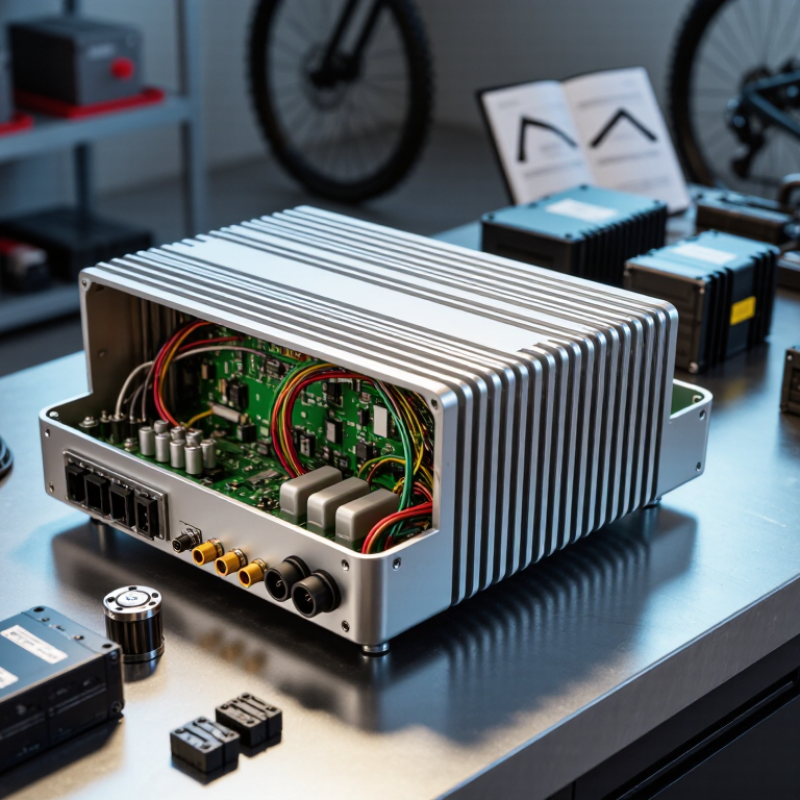
What Is an Electric Motor Controller and How Does It Work?
An electric motor controller is the bridge between a power source and a motor. It regulates voltage, current, speed, and torque. In practical terms, it decides how much electrical energy the motor receives at each moment. A controller for a small fan differs greatly from one used in an industrial pump.
Most modern controllers use power switches, such as MOSFETs or IGBTs, to turn current on and off rapidly. This process is called pulse-width modulation. A control board reads signals from sensors, then adjusts the switching pattern. Hall sensors may report rotor position. Current sensors detect overloads. Temperature sensors help prevent overheating.
The working process is quick and continuous. A speed command enters the controller from a pedal, panel, or automated system. The controller compares that command with real motor feedback. It then increases or reduces electrical output. During testing, I check current ripple, casing temperature, braking response, and performance under changing loads. A unit may run smoothly without load but struggle when a conveyor starts suddenly. That mistake is easy to miss.
In China’s electric motor market, suitable controllers are available for brushless DC, permanent-magnet, and induction motors. The best choice depends on voltage range, rated current, cooling method, communication functions, and protection settings. A sealed controller may suit dusty equipment, while a ventilated design can manage higher heat. Specifications can look impressive. Real installation conditions still matter more.
Which Types of Electric Motor Controllers Are Made in China?
China produces several types of electric motor controllers for industrial, commercial, and light mobility applications. Brushed DC controllers remain common in small machines, carts, and battery-powered equipment. They are simple, affordable, and easy to service. However, brush wear creates maintenance demands. I have seen dust build up around these motors faster than expected.
Brushless DC controllers are widely manufactured for fans, pumps, scooters, automation equipment, and compact tools. They usually use electronic commutation and Hall sensors, although sensorless designs are also available. AC induction motor controllers often include variable-frequency drive functions. These controllers adjust speed and torque for pumps, conveyors, compressors, and workshop machinery. Permanent magnet motor controllers offer higher efficiency in many applications. Their performance depends heavily on motor matching and cooling.
Chinese manufacturers also produce servo controllers for precise positioning, regenerative controllers for energy recovery, and integrated motor drives with communication interfaces. Common interfaces include CAN, RS-485, and industrial Ethernet. Custom firmware, voltage ranges, and enclosure designs are frequently available through OEM or ODM production. Yet customization can hide practical weaknesses. A controller may pass a factory test but behave poorly during voltage dips or sudden load changes. Requesting thermal tests, overload curves, wiring diagrams, and sample units is essential. Certification documents should match the exact model, not a similar series. The best choice depends on motor type, battery or grid input, duty cycle, protection requirements, and service conditions.
What Are the Best Electric Motor Controllers in China?
China manufactures several widely used electric motor controller types. The chart compares common nominal DC-bus voltage classes used in these controller categories; higher voltage is generally associated with larger industrial or traction applications.
Key takeaway: BLDC and PMSM controllers are commonly used in low- and medium-voltage electric vehicles, robotics, appliances, and automation. AC induction motor drives and servo drives are typically selected for industrial equipment requiring higher power, precise speed control, or accurate positioning.
What Features Define a High-Quality Chinese Motor Controller?
A high-quality Chinese motor controller should deliver stable performance under real working conditions, not just impressive laboratory figures. Engineers should check rated voltage, continuous current, peak current, and thermal limits together. A controller that handles a brief overload may still fail during long climbs or repeated starts. Heat matters greatly.
Good units use efficient MOSFETs, accurate current sensors, and responsive control software. These features support smoother acceleration and better torque at low speed. Clear protection functions are equally important. Overcurrent, overvoltage, overheating, short circuits, and stalled motors should trigger controlled responses. Sudden shutdowns can create safety problems in practical equipment.
Testing should include dust, vibration, humidity, and rapid temperature changes. A sealed housing helps, but sealing alone does not guarantee reliable cooling. Technicians should inspect cable terminals, connector quality, and communication stability after extended operation. Fault records and adjustable parameters also make maintenance easier. Still, specifications can hide weaknesses. A controller may perform well on a test bench but behave poorly with a mismatched motor. Engineers should test the complete drive system, including battery, wiring, load, and braking. No controller is perfect. Careful verification remains essential.
How Do China’s Leading Motor Controller Brands Compare?
China’s leading motor controller brands differ more in engineering depth than in catalog size. High-volume manufacturers often offer competitive pricing, stable production, and broad voltage ranges. Their controllers suit electric scooters, utility vehicles, and light industrial equipment. However, standard models may provide limited customization.
Engineering-focused suppliers usually perform better when applications require precise tuning. Field-oriented control can deliver smoother acceleration and quieter operation. Some units also support CAN communication, regenerative braking, and programmable current limits. These features matter when battery voltage changes under load. A controller should also survive heat, vibration, dust, and repeated starts.
Look beyond the product page. Ask for thermal test data, EMC reports, firmware revision records, and component traceability. Reliable suppliers explain testing methods instead of using vague claims. Check whether the rated current is continuous or peak. This distinction is easy to miss. A controller rated at 100 amperes may tolerate that level for only a few seconds.
Cost-focused brands can be attractive for simple projects, but their documentation may feel thin. That creates delays during installation and troubleshooting. In my view, technical support is part of the controller itself. Response time, wiring diagrams, sample firmware, and spare-unit policies deserve comparison. Datasheets can also be optimistic. Actual performance depends on cooling, motor matching, and calibration. A careful buyer should test a sample under real load before approving a large order.
How Should Buyers Select the Right Electric Motor Controller?
Selecting an electric motor controller should begin with the application, not the catalogue price. China’s new-energy vehicle sales reached about 9.5 million units in 2023, according to the China Association of Automobile Manufacturers. This scale increases demand for dependable thermal, electrical, and software performance.
Match the controller’s voltage to the battery’s operating range, including charging peaks and low-temperature conditions. Compare continuous current, peak current, and peak duration separately. A controller rated at 400 A for ten seconds may not support 250 A continuously. That distinction is often missed.
Check compatibility with the motor’s phase count, sensor type, and control method. Hall sensors, encoders, and sensorless control behave differently during startup. Regenerative braking also requires careful battery and bus-voltage coordination. The International Energy Agency reported that global electric car sales exceeded 14 million in 2023, with China representing roughly 60% of those sales. Buyers should therefore request test evidence, not only headline efficiency figures.
Thermal design matters in real installations. Inspect cooling paths, enclosure protection, EMC results, and communication protocols such as CAN. Ask for derating curves at 40°C or higher. Laboratory efficiency can look excellent. Road dust and poor airflow may change it quickly. A controller with more current capacity is not automatically the better choice. Excess capacity can increase cost, size, and calibration difficulty. Request sample testing under the actual motor, load cycle, and battery conditions before approving volume production.
FAQS
It connects the power source with the motor. It regulates voltage, current, speed, and torque. In simple terms, it decides how much energy the motor receives. Small fans need simpler controllers than industrial pumps.
Many controllers use rapid electronic switching. This method is called pulse-width modulation. The controller changes the switching pattern to adjust motor power. A sensor may report rotor position, current, or temperature. The process happens continuously.
The controller compares the speed command with real motor feedback. It then raises or reduces electrical output. A conveyor may run smoothly empty but struggle during startup. That problem is easy to miss. Testing under real load is important.
Common types include brushed DC, brushless DC, induction motor, and permanent-magnet controllers. Servo controllers support precise positioning. Regenerative controllers can recover energy during braking. Integrated drives may include communication functions. Each type needs a suitable motor.
Check motor type, voltage range, rated current, and cooling method. Also review duty cycle, protection settings, and installation conditions. A controller for a battery system may not suit grid-powered equipment. Motor matching matters greatly. Specifications alone can mislead.
Some controllers support CAN, RS-485, or industrial Ethernet. These interfaces can connect motors with panels or automated systems. Programmable current limits may improve control. Communication features are useful, but only when the equipment supports them.
Request thermal test data, overload curves, wiring diagrams, and sample units. Check casing temperature during operation. Observe braking response and current ripple. Test sudden starts and changing loads. I might overlook one detail.
Not always. A sealed enclosure can suit dusty equipment. A ventilated design may remove heat more effectively. The correct choice depends on dust, moisture, airflow, and operating temperature. Poor cooling can shorten service life.
Compare technical support, documentation, firmware records, and spare-unit policies. Ask whether current ratings are continuous or peak values. A stated current may last only several seconds. Confirm certification documents match the exact model. A sample under real load reveals more than a polished catalog.
Conclusion
An Electric Motor Controller is the central device that regulates a motor’s speed, torque, direction, and overall performance. It works by receiving signals from the operator or control system, processing operating conditions, and adjusting the electrical power delivered to the motor. In China, buyers can find various controller types, including brushed and brushless DC controllers, AC motor drives, and specialized units for electric vehicles, industrial equipment, robotics, and renewable energy systems.
A high-quality Chinese motor controller should offer efficient power conversion, stable operation, accurate control, effective heat dissipation, and reliable protection against overload, overheating, short circuits, and voltage fluctuations. When comparing available products, buyers should consider technical performance, compatibility, durability, testing standards, customization options, and after-sales support. The right choice depends on the motor type, rated voltage and power, application environment, control requirements, installation space, and total operating cost.
 Valex Motor
