What Are Chinas Top High Speed Gear Motor Manufacturers?

Time:2026-09-21 Author:Aria
0%

China has become a major production base for precision transmission systems, including compact motors used in automation, robotics, packaging, and material handling. This guide explores China’s top High Speed Gear Motor manufacturers through practical and technical criteria. It focuses on engineering capability, product consistency, customization, and after-sales support.

A dependable manufacturer should provide complete specifications, including rated speed, torque, gearbox ratio, insulation class, noise level, and service life. Factory experience matters. A supplier producing thousands of motors annually may understand heat buildup, bearing wear, and vibration control more effectively. However, production volume alone cannot prove quality. Buyers should review test reports, quality certificates, sample performance, and customer references. A factory audit can reveal details that brochures omit, such as winding cleanliness, assembly discipline, and final inspection procedures.

Numbers can mislead. A motor reaching a high no-load speed may lose efficiency under continuous load. Therefore, this overview considers real operating conditions rather than impressive catalogue figures. It also examines whether manufacturers support prototype testing, small-batch orders, and international compliance requirements. Rankings can change as technology, capacity, and service standards develop. Some published claims may require independent verification, especially when efficiency data lacks testing conditions. By comparing measurable performance with practical reliability, readers can identify manufacturers suited to their equipment, budget, and operating environment. The strongest choice is not always the cheapest or fastest supplier. It is the partner that communicates clearly, documents results, and accepts responsibility when performance falls short.
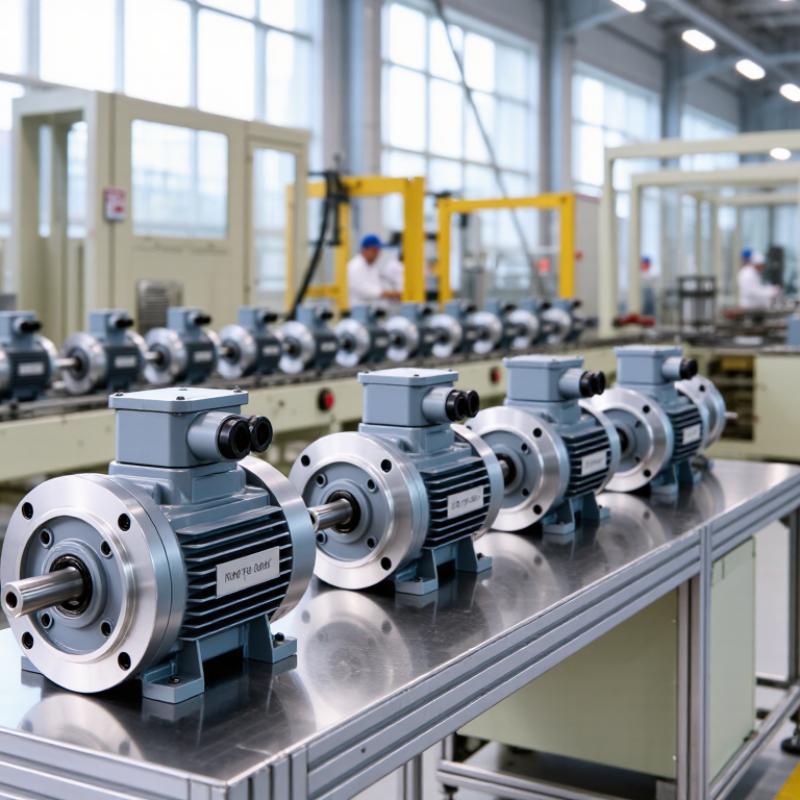
What Are Chinas Top High Speed Gear Motor Manufacturers?

What Defines a High-Speed Gear Motor Manufacturer in China?

What defines a high-speed gear motor manufacturer in China? It is not simply a motor with a higher RPM rating. A capable supplier combines precise gearing, stable torque, thermal control, and repeatable assembly. In factory audits, engineers should inspect gear tooth finishing, bearing selection, lubricant behavior, and vibration records. A clean workshop helps, but process evidence matters more.

Market demand supports this standard. The International Federation of Robotics reported 276,288 industrial robots installed in China during 2023, representing about 51% of global installations. These systems require compact drives with accurate positioning and dependable duty cycles. A serious manufacturer should provide measured speed-torque curves, noise data, temperature-rise tests, and endurance results. According to the MarketsandMarkets gear motor industry report, the global gear motor market is projected to grow strongly through 2028, increasing pressure for efficient and scalable production.

Certification is only one checkpoint. Manufacturers should also demonstrate traceability from incoming materials to final testing. Look for automated winding inspection, gear backlash measurement, and load testing under realistic conditions. Fast motors can produce dangerous heat when poorly matched. Design teams must calculate duty cycles, peak loads, and cooling limits before recommending a model. A polished datasheet is not enough. No test plan is perfect. Buyers should still question missing data, inconsistent samples, and vague efficiency claims. That caution often separates a reliable Chinese high-speed gear motor manufacturer from a low-cost assembler.

What Defines a High-Speed Gear Motor Manufacturer in China?

High-speed gear motor manufacturers are typically evaluated by motor-side speed capability, precision transmission design, thermal management, efficiency, and the ability to customize products for industrial applications.

The chart shows commonly used motor-side speed reference points in industrial drive selection. Actual gear-motor output speed depends on the reduction ratio, load, duty cycle, motor design, and application requirements. The data is technical reference information and does not represent company or brand rankings.

Key Criteria for Ranking China’s High-Speed Gear Motor Manufacturers

What Are China’s Top High-Speed Gear Motor Manufacturers?

Ranking China’s high-speed gear motor manufacturers requires more than comparing catalog prices. A reliable evaluation starts with operating data. Check rated speed, continuous torque, peak torque, backlash, noise, and service life. These figures should match real application conditions, not ideal laboratory claims.

Thermal control is equally important. High-speed motors can heat quickly inside compact equipment. Strong manufacturers provide cooling solutions, efficiency curves, endurance testing, and clear tolerance data. Precision machining also matters. Small gear errors may cause vibration, uneven motion, or early wear. Review inspection records, material specifications, and production traceability. Technical support deserves attention too. An experienced engineering team can adjust gearing, winding design, seals, and connectors for specific machinery. Certifications help, but they do not replace practical evidence. No ranking is permanent. A supplier may excel in robotics but perform poorly in heavy-duty conveyors.

Tips: Ask for test reports from a similar application. Compare continuous performance, not only maximum speed. Request sample units before placing large orders. Listen for abnormal noise during startup and after prolonged operation. Check temperature rise with a real load. Also examine response times for warranty and replacement support. These details often reveal operational reliability better than polished marketing materials. I would also document every agreed specification. Memory is not a quality-control system.

Leading Chinese Manufacturers and Their Product Specialties

China’s leading high-speed gear motor manufacturers often specialize by application, not by one universal design. Precision planetary motor producers serve robotics, inspection equipment, and compact automation. Their strengths include low backlash, rigid housings, and stable torque at elevated speeds.

Another group focuses on brushless DC gear motors for pumps, medical devices, fans, and battery-powered systems. These factories commonly offer 24V or 48V versions, Hall sensors, and customized output shafts.

Servo-oriented manufacturers usually emphasize fast response, encoder integration, and repeatable positioning. Helical gear motor specialists target conveyors and industrial machinery, where quieter operation and continuous duty matter more than extreme compactness.

Details matter here. A serious supplier should show speed-torque curves, thermal test results, noise data, and gearbox efficiency under load. CNC machining, dynamic rotor balancing, and automated winding can improve consistency. Batch traceability also helps engineers investigate early failures.

Still, not every polished catalog proves expertise. Some suppliers list impressive speeds without explaining lubrication, duty cycle, or heat dissipation. That is a real concern. High-speed operation can expose bearing wear, vibration, and seal limitations quickly.

During evaluation, buyers should request sample testing, inspect quality records, and compare measured performance with published figures. Factory visits can reveal whether testing is routine or merely presented for sales meetings.

Even experienced teams can overlook mounting errors. A careful installation review remains necessary.

Manufacturing Quality, Certifications, and Customization Capabilities

What Are Chinas Top High Speed Gear Motor Manufacturers?

China’s leading high-speed gear motor manufacturers are usually identified by process control, not advertising. In practical evaluations, inspect machining accuracy, winding consistency, and gear noise. A clean factory floor helps, but it proves little alone. Ask for torque curves, temperature-rise records, and endurance-test data. These details reveal how a motor performs after months of continuous operation.

Manufacturing quality should connect with recognized systems. ISO 9001 supports traceable production and corrective actions. CE and RoHS documentation may support access to specific markets. However, certificates require careful checking. Confirm the issuing body, product scope, and expiration date. A certificate is not performance evidence. Independent testing is often worth the extra cost. Small omissions can become expensive failures.

Customization separates capable suppliers from simple assemblers. Strong manufacturers can adjust voltage, shaft dimensions, gear ratios, encoder options, braking systems, and mounting patterns. They should also provide samples before mass production. During evaluation, test startup torque, vibration, noise, and heat under the real load. One overlooked issue is duty cycle. A motor rated for short operation may struggle in continuous service. Specifications can look perfect on paper. Field conditions are less polite.

What Are China's Top High Speed Gear Motor Manufacturers? - Manufacturing Quality, Certifications, and Customization Capabilities

Evaluation Area Industry-Recognized Requirement Objective Evidence to Request Why It Matters for High-Speed Gear Motors Recommended Assessment
Quality Management A documented quality-management system aligned with ISO 9001:2015. Valid certificate, certification scope, issuing body, audit status, and controlled production procedures. Reduces process variation in machining, winding, assembly, inspection, and final testing. Pass only when the certificate is current and covers the relevant manufacturing site.
Motor Design Compliance Design and test methods referenced to applicable IEC 60034 requirements for rotating electrical machines. Datasheets, type-test reports, efficiency data, temperature-rise results, and rated operating conditions. Supports consistent performance, thermal safety, efficiency verification, and interchangeability. Confirm that test conditions match the intended voltage, frequency, duty cycle, and speed.
Gearbox Accuracy Controlled gear geometry, backlash, runout, surface finish, and shaft alignment. Gear inspection records, coordinate-measuring reports, backlash data, and assembly tolerances. Accurate gearing helps limit noise, vibration, torque ripple, and premature wear at high rotational speed. Request measured values rather than general claims such as “precision gearbox.”
Bearing and Lubrication Control Bearing selection and lubricant specification appropriate for the required speed, load, temperature, and duty cycle. Bearing data, lubricant technical sheet, service-temperature limits, grease-fill procedure, and maintenance guidance. Incorrect lubrication or bearing selection can increase heat, vibration, friction, and failure risk. Verify suitability for continuous operation and the actual installation orientation.
Balancing and Vibration Testing Rotor balancing and vibration measurement using documented methods and defined acceptance limits. Balancing records, vibration spectrum or RMS readings, test speed, fixture details, and acceptance criteria. Dynamic imbalance becomes more significant as speed increases and may shorten bearing and gear life. Require sample test reports from the same product family and operating range.
Ingress Protection An IP rating tested according to IEC 60529 when protection against dust or water is required. Test report or certificate identifying the exact enclosure design and tested configuration. The correct enclosure protects windings, bearings, and gearing in dusty or wet environments. Do not treat an IP rating as proof of chemical resistance, submersion suitability, or washdown performance.
Electrical Safety Routine safety checks such as winding resistance, insulation resistance, dielectric withstand, and no-load operation. Final inspection records, test limits, calibrated equipment list, and traceable serial-number records. Verifies insulation integrity and helps identify assembly or winding defects before shipment. Check whether testing is performed on every unit or only on sampled production.
Environmental Compliance Material and substance controls relevant to RoHS and, where applicable, REACH requirements. Supplier declarations, material declarations, laboratory reports, and controlled bills of materials. Supports market access and reduces restricted-substance compliance risk. Confirm the declaration applies to the complete motor and gearbox assembly.
Customization Capability Ability to modify gear ratio, output shaft, mounting, winding, connector, brake, encoder, thermal protection, and enclosure. Engineering drawings, change-control records, prototype reports, sample approval process, and production capability statement. Application-specific changes can improve torque, speed stability, installation fit, noise, and service life. Evaluate engineering support and validation capability, not only the number of available options.
Prototype and Validation A defined process from technical specification and prototype approval to pilot production and design freeze. Validation plan, endurance-test results, load and temperature data, failure analysis, and signed sample approval. Helps ensure that a customized design remains reliable under real operating conditions. Require application-specific testing instead of relying solely on catalog test data.
Traceability and After-Sales Support Traceable components, documented warranty terms, spare-parts support, and corrective-action procedures. Serial-number records, warranty policy, replacement-part list, service response process, and corrective-action reports. Improves fault diagnosis, replacement accuracy, and long-term operating continuity. Use a written service-level agreement for critical or high-volume applications.
Supplier Verification Independent confirmation of legal manufacturing scope, production location, certifications, and technical claims. On-site audit, remote factory audit, certificate verification, reference projects, and pre-shipment inspection. Prevents qualification based only on brochures, resellers, outdated certificates, or unverified performance data. Treat third-party verification and application testing as essential before series purchasing.

Note: Certification availability, performance limits, and customization scope vary by manufacturing site and product configuration. Always verify current documents for the exact motor and gearbox model being evaluated.

How to Choose the Right Chinese High-Speed Gear Motor Supplier

Choosing the right Chinese high-speed gear motor supplier requires more than comparing catalog prices. Start with the motor’s actual operating conditions. Share speed, torque, duty cycle, voltage, noise limits, and installation space. A supplier that asks detailed questions usually understands engineering risks better than one offering an instant quotation.

Request test data Request test data for efficiency, temperature rise, vibration, and gearbox backlash. Ask whether tests use your real load profile. Request drawings, material details, and tolerance records before approving samples. During a factory audit, inspect winding equipment, gear inspection tools, assembly areas, and final testing stations. Clean workspaces do not guarantee quality, but poor traceability is a warning sign.

Check production capacity Check production capacity without assuming the largest factory is best. Confirm lead times, spare parts availability, warranty terms, and technical support after delivery. Ask how failed units are analyzed and documented. A reliable supplier should explain corrective actions clearly. Independent certification can help, but verify its scope and validity. Certificates alone are not enough.

Sample testing matters. Run the motor continuously, measure noise at several speeds, and inspect temperature after extended operation. I once focused too heavily on purchase cost; maintenance expenses later changed the calculation. Chinese manufacturers vary widely in process control and communication. Clear specifications, recorded test results, and realistic promises are stronger selection signals than impressive websites. Flexible customization is useful, but frequent design changes may reveal weak standardization. Be careful.

FAQS

What defines a high-speed gear motor manufacturer in China?

It combines precise gears, stable torque, thermal control, and repeatable assembly. Look beyond RPM. Ask for speed-torque curves, vibration records, temperature-rise tests, and endurance results. A clean workshop helps, but process evidence matters more.

What technical data should buyers request?

Request efficiency, noise, backlash, vibration, and temperature data. Check whether tests match your load profile. A glossy datasheet is not proof. Missing data deserves questions.

How should operating conditions be shared with a supplier?

Provide speed, torque, duty cycle, voltage, noise limits, and installation space. Include peak loads and cooling limits. Small details matter.

What should engineers inspect during a factory audit?

Inspect gear tooth finishing, bearings, lubricants, winding equipment, and gear measurement tools. Review material traceability and final testing records. Observe assembly areas closely. Clean floors are not enough.

Why are thermal tests important for high-speed motors?

Fast operation can create dangerous heat when the motor is poorly matched. Test temperature after extended running. Compare results with your real duty cycle. Heat changes everything.

How can sample testing reveal supplier quality?

Run samples continuously at several speeds. Measure noise and temperature during operation. Check gearbox backlash afterward. One short test may hide problems.

Are certificates enough when selecting a supplier?

No. Verify the certificate’s scope and validity. Also review test plans, traceability, and corrective-action records. Paperwork can look stronger than the process.

How should buyers compare supplier prices and capacity?

Do not choose only the lowest price or largest factory. Compare lead times, spare parts, warranty terms, support, and failure analysis. I once emphasized purchase cost too much. Later maintenance changed the calculation.

Conclusion

China’s High Speed Gear Motor manufacturing sector includes companies that combine efficient motor design, precise gear transmission, reliable performance, and flexible production capabilities. This article explains what distinguishes a high-speed gear motor manufacturer, including engineering expertise, product consistency, research and development strength, production capacity, and after-sales support. It also outlines the main criteria for evaluating suppliers, such as speed range, torque output, energy efficiency, operating durability, noise control, and application suitability.

The discussion further examines common product specialties, manufacturing quality, international certifications, testing procedures, and customization options for different equipment requirements. When selecting a Chinese supplier, buyers should assess technical communication, quality management, delivery reliability, documentation, warranty policies, and long-term service capabilities. A careful comparison of these factors can help businesses identify a dependable partner capable of delivering safe, efficient, and application-specific High Speed Gear Motor solutions.

Aria

Aria

Aria is a dedicated marketing professional with a deep passion for innovative strategies and a keen understanding of our company's product offerings. With a wealth of experience in the industry, Aria excels at crafting engaging content that highlights the unique features and benefits of our......