How to Choose a Custom Gear Motor for Your Application?

Time:2026-10-30 Author:Sienna
0%

Choosing a Custom Gear Motor is not simply a matter of selecting a motor and adding a gearbox. The unit must deliver the required torque and speed at the machine’s actual operating point. A conveyor carrying uneven loads, for example, may need different starting torque and service life than a lightly loaded positioning axis. Small details matter.

The International Energy Agency’s 2011 report, Energy-Efficiency Policy Opportunities for Electric Motor-Driven Systems, estimated that these systems use about 45% of global electricity. That figure highlights why efficiency deserves attention alongside purchase price. For a sound specification, define load, speed range, duty cycle, starts per hour, available space, mounting position, and operating temperature. Then check gearbox ratio, output torque, service factor, backlash, lubrication, and thermal limits. A motor that fits the drawing may still overheat in a tight enclosure.

Gear-design expert Dr. Alexander Kapelevich’s published work offers a practical takeaway: match gear geometry and transmission design to real loads, not an idealized catalog case. Treat this as a paraphrase of his engineering approach, not a verbatim quotation. That distinction matters. A reliable supplier should show its assumptions, calculations, and test conditions, rather than promise a perfect fit from a brief description. Ask for evidence on noise, efficiency, and expected life under comparable duty. Still, no spreadsheet captures every shock load or maintenance habit. Measure the machine, question the first estimate, and leave room to revise the specification.
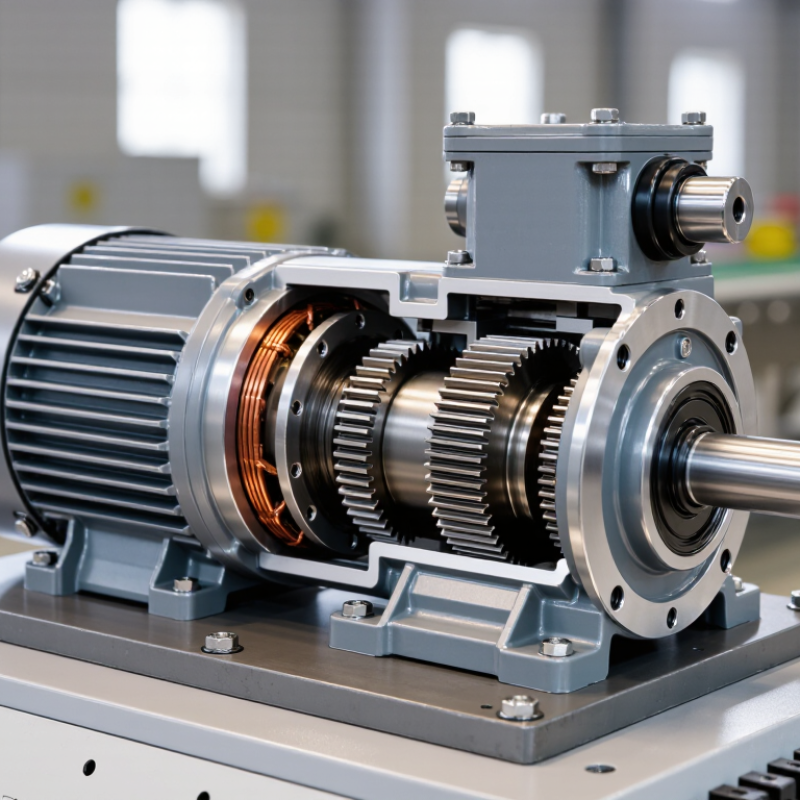
How to Choose a Custom Gear Motor for Your Application?

Identify the Application Requirements and Operating Conditions

Before choosing a custom gear motor, define the job in measurable terms. Record the driven load’s required speed, continuous torque, peak torque, and start frequency. A conveyor moving full bins needs different peak capacity from one carrying an empty belt. Note how long each operating cycle lasts, including pauses and reversals. Details matter.

Then map the real operating environment. Measure ambient temperature near the motor, not across the room. Record dust, moisture, washdown exposure, vibration, and available mounting space. A gearbox that fits the drawing may still overheat behind a guard or fail under repeated shock loads. The U.S. Department of Energy’s 2014 motor-system sourcebook estimates that motor-driven systems use about 68% of electricity consumed in U.S. manufacturing. That figure makes duty cycle and load profile worth checking, not guessing. Oversizing can also waste energy and money.

Ask operators what the machine does during a bad shift. Does it jam, start under load, or run slower at certain times? These imperfect details often expose requirements that a clean specification misses. Measure it. Compare expected torque and speed with actual readings, and include a safety margin based on documented load variation. State the target service life and maintenance limits, too. These inputs give the motor supplier a defensible basis for selecting gear ratio, output shaft, enclosure, and thermal capacity.

Choose the Motor Type and Gearbox Configuration

Choosing the motor type and gearbox configuration starts with the load, not the catalog. Estimate the required output speed and starting torque, then check how often the motor will run. A brushed DC motor can suit simple speed control, while a brushless motor may fit longer duty cycles. AC motors can work well where steady operation is needed. Real conditions matter. A conveyor that starts under a full load needs more starting torque than one that starts empty.

Next, match the gearbox to the space and motion. Spur gears are often compact and economical, but may create more noise. Planetary gearboxes offer high torque in a small footprint, though heat and cost deserve attention. Worm gearboxes can provide strong reduction in limited space, but efficiency may be lower. Check mounting orientation, shaft direction, backlash, and allowable radial load. A neat drawing can still miss a cable bend or access problem; leave room for installation and maintenance.

Tips: Compare the motor’s rated speed with the gearbox ratio to estimate output speed. Confirm the gearbox’s continuous torque rating, not only its peak rating. Ask for duty-cycle and thermal data. Small details matter. I would also revisit the choice after checking the actual load profile; estimates are useful, but they are rarely perfect.

How to Choose a Custom Gear Motor for Your Application?

Choose the Motor Type and Gearbox Configuration

Approximate single-stage reduction ratios vary by design and manufacturer. Use the required output speed and torque, duty cycle, space, and operating conditions to narrow down the motor type and gearbox configuration; confirm final ratings with the manufacturer.

Calculate the Required Speed, Torque, and Power

How to Choose a Custom Gear Motor for Your Application?

Calculate the Required Speed, Torque, and Power

Start with the driven load, not the motor catalog. Record the required output speed in revolutions per minute, then estimate the torque needed during normal operation and startup. A conveyor carrying boxes may run steadily, but its torque demand can rise when it starts fully loaded. Measure real conditions where possible. Estimates can be wrong.

Calculate shaft power with this formula: power in kilowatts = torque in newton-metres × speed in rpm ÷ 9,550. For example, 12 Nm at 60 rpm requires about 0.075 kW of output power. This is the load’s mechanical requirement, not the motor’s electrical input. Gearbox losses, duty cycle, temperature, and frequent starts affect selection.

The U.S. Department of Energy’s Improving Motor and Drive System Performance sourcebook reports that motor-driven equipment accounts for about 54% of electricity use in U.S. manufacturing. Efficient sizing matters, but oversizing is not automatically safer; it may increase cost and energy use.

Tips: Check the motor’s rated output torque and speed at the gearbox shaft. Allow suitable margin for startup and shock loads, based on measured conditions. Confirm the required duty cycle and mounting limits with the supplier. A small detail can change the choice.

Assess Size, Mounting, Materials, and Environmental Constraints

How to Choose a Custom Gear Motor for Your Application?

Start with the available space and the load the motor must move. Measure the mounting area, shaft position, and clearance around nearby parts. A motor that fits on paper may still block a cable or service panel. Check the required torque and speed at the actual operating point, not just the motor’s maximum ratings. Leave room for starting loads and occasional jams. Small details matter.

Mounting choices affect alignment, vibration, and maintenance access. Specify the mounting face, hole pattern, shaft orientation, and whether the motor will sit horizontally or vertically. If it must connect to an existing gearbox or bracket, compare drawings and tolerances before ordering. A few millimeters can matter. It is easy to overlook access for a wrench, especially in a compact enclosure.

Match materials and protective features to the real environment. Humidity, washdown, dust, chemicals, and temperature can affect the housing, seals, bearings, and lubricant. Stainless steel may suit corrosive surroundings, while suitable coatings can be adequate for milder exposure. Confirm the protection rating against the actual cleaning method; “sealed” does not mean suitable for every spray or chemical. Consider heat, too. Enclosed spaces can trap it, shortening service life. A neat specification sheet cannot replace a site check, and the first estimate may need revision after testing.

Verify Performance, Compatibility, and Customization Options

A custom gear motor should be assessed as a complete drive system, not chosen by output power alone. Record the required speed, continuous and peak torque, operating hours, and load inertia. Check what happens during startup; a conveyor carrying a full load can demand far more torque than it needs once moving. Small details matter. The International Energy Agency’s Energy Efficiency 2023 report estimates that electric motor systems account for about 53% of global electricity use. That figure covers many applications, but it underlines why selecting an efficient motor and suitable gear ratio matters. Avoid sizing from a single ideal operating point.

Compatibility needs equal attention. Confirm mounting dimensions, shaft diameter, rotation direction, supply voltage, control method, and available space. Then review temperature, dust, moisture, and vibration at the installation site. Specify only useful options, such as an encoder for position feedback, a brake for holding loads, or seals for a harsh environment. Ask for speed-torque curves and thermal limits, not just a headline efficiency value. Test the proposed configuration against the real duty cycle if possible. I have seen specifications that looked complete but missed cable clearance or startup frequency. Easy to overlook. A little uncertainty remains until the motor is tested under actual conditions.

FAQS

What should I measure before choosing a custom gear motor?

Record required speed, continuous torque, peak torque, and starts per hour. Note pauses, reversals, and how long each cycle lasts. Measure the real load.

How do I account for jams and heavy starts?

Check whether the machine starts with full bins or an empty belt. Include occasional jams and measured load variation when setting a safety margin. Estimates can miss a rough shift.

Which motor type fits my application?

Brushed DC motors can suit simple speed control. Brushless motors may fit longer duty cycles, while AC motors can work well for steady operation. Match the choice to actual run time.

How should I choose a gearbox?

Spur gearboxes are often compact, but can be noisier. Planetary types offer high torque in a small space; worm types provide strong reduction but may be less efficient. Check heat and cost, too.

Should I compare peak or continuous torque ratings?

Check the gearbox’s continuous torque rating, then confirm it can handle peak loads. A brief high rating does not prove it can run that way all day.

What mounting details are easy to overlook?

Measure the mounting face, hole pattern, shaft position, and nearby clearance. Leave room for cables, a wrench, and service access. A few millimeters can matter.

How do dust, moisture, and cleaning affect the motor?

Match seals, housing, bearings, and lubricant to the site conditions. Confirm the protection rating suits the actual spray or chemical. “Sealed” is not enough detail.

How can I prevent overheating in a compact space?

Measure temperature near the motor and consider trapped heat behind guards. Ask for thermal and duty-cycle data, then test under real operating conditions. I would revisit the first estimate.

Conclusion

Choosing a Custom Gear Motor begins with a clear understanding of the application’s requirements and operating conditions, including duty cycle, load behavior, available power, and the environment in which the motor will run. These details help narrow the options for motor type and gearbox configuration, ensuring the drive system suits the task rather than relying on a one-size-fits-all choice.

Next, determine the required output speed, torque, and power, then check that the motor can meet those targets with an appropriate operating margin. Consider the available installation space, mounting arrangement, materials, and exposure to factors such as dust, moisture, or temperature. Finally, verify that the motor and gearbox are compatible with the surrounding equipment and assess customization options that may improve fit, performance, and reliability. A methodical evaluation helps identify a solution that meets both technical needs and practical constraints.

Sienna

Sienna

Sienna is a skilled marketing professional with a deep expertise in our company’s core products and services. With a passion for innovation and detail, she plays a pivotal role in crafting insightful blog posts that not only highlight the unique features of our offerings but also provide valuable......