How to Choose an Integrated Gear Motor for Global Sourcing?

Time:2026-09-11 Author:Ethan
0%

Choosing an Integrated Gear Motor for global sourcing requires more than comparing prices or rated torque. The motor, gearbox, controller, and mounting design must work as one dependable system. A compact unit may simplify installation, reduce wiring, and save cabinet space. Yet its real value appears under continuous load, heat, vibration, and inconsistent operating conditions.

Experienced buyers begin with the application, not the supplier catalogue. Define output speed, torque, duty cycle, voltage, ambient temperature, noise limits, and available space. Small details matter. A conveyor moving packaged goods may need different protection from a motor used near washdown areas. Confirm ingress protection, insulation class, thermal performance, brake requirements, and shaft tolerances. Ask for dimensional drawings, efficiency data, test reports, traceability records, and clear warranty terms. Relevant IEC standards can support evaluation, but compliance claims should be verified against current market requirements.

Supplier capability also deserves careful attention. Review production controls, sample testing, quality records, spare-part support, and communication practices. Request a representative sample before approving a larger order. That assumption fails. A motor that performs well in a laboratory may struggle after long shipping, voltage variation, or poor installation. Packaging, documentation, customs information, and regional service plans can affect the total cost. Some decisions remain uncertain until field data is available. Therefore, compare suppliers using measured evidence, not polished promises. The right Integrated Gear Motor balances performance, maintainability, certification, delivery reliability, and realistic lifecycle cost. It may not be the cheapest choice. It should be the easiest one to trust after testing.
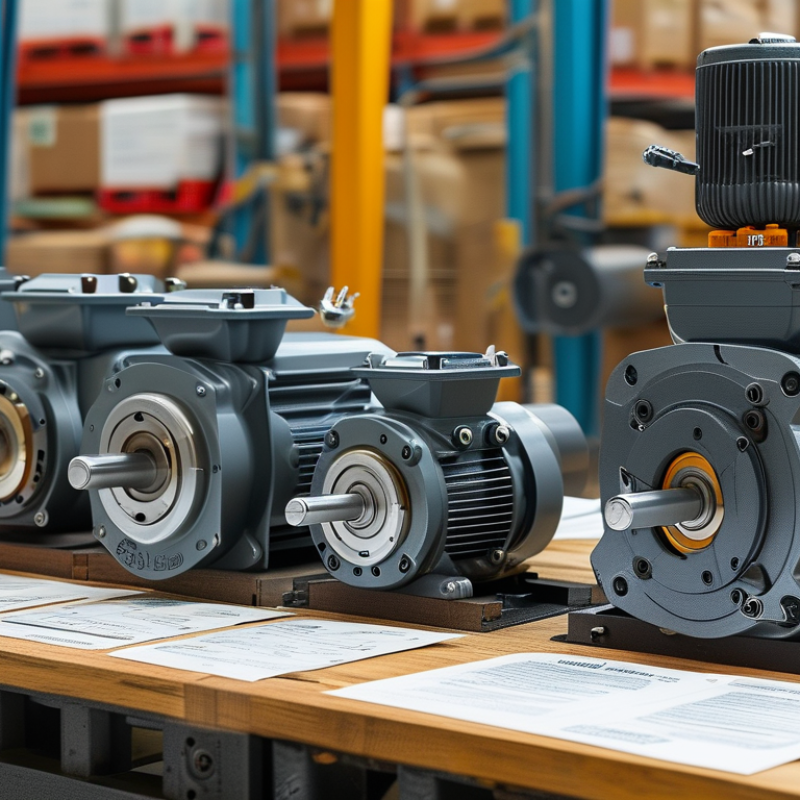
How to Choose an Integrated Gear Motor for Global Sourcing?

Define the Application Requirements for an Integrated Gear Motor

How to Choose an Integrated Gear Motor for Global Sourcing?

Define the application before comparing suppliers or prices. Record the required output torque, speed, gear ratio, duty cycle, and starting load. Measure the driven machine, not only the motor shaft. According to International Energy Agency analysis, electric motor systems consume about 53% of global electricity. Small efficiency losses can therefore become significant operating costs. The U.S. Department of Energy also reports that motor-driven equipment can represent roughly 70% of industrial electricity use.

Specify the operating environment in practical terms. Note ambient temperature, dust, moisture, shock, installation angle, and available space. A conveyor in a humid warehouse may need different sealing than a packaging machine indoors. Confirm local voltage, frequency, efficiency requirements, and certification needs before global sourcing. IEC 60034-30-1 provides a common framework for motor efficiency classes, but compliance alone does not guarantee suitable performance. Check gearbox service factor, radial loads, backlash, thermal limits, and noise.

Real machine data matters more than a neat specification sheet. I have seen projects overstate peak torque and underestimate repeated starts. That mistake can produce overheating, shortened gear life, or unnecessary oversizing. It is easy to miss. Request test curves, temperature-rise data, dimensional drawings, and sample validation. A spreadsheet may still hide vibration or poor cable routing. Leave room for honest uncertainty, especially when the duty cycle changes between countries or production shifts.

Compare Motor Types, Gear Ratios, and Performance Specifications

How to Choose an Integrated Gear Motor for Global Sourcing?

When selecting an integrated gear motor, compare the motor type with the actual load. Induction motors suit steady, continuous operation. Brushless motors offer efficient speed control and lower maintenance. Brushed motors may reduce initial cost, but their brushes wear during frequent cycling. I have seen buyers choose by wattage alone. That decision often creates overheating problems.

Gear ratio controls more than output speed. A higher ratio increases torque but can reduce efficiency and response speed. For a conveyor moving 30 kilograms, calculate starting torque, running torque, and acceleration separately. Planetary gearboxes usually provide compact, precise transmission. Worm gearboxes can offer strong reduction and holding ability, but they may generate more heat. Check backlash carefully.

Small details matter.

Review rated voltage, current, duty cycle, insulation class, noise, and thermal limits. Confirm whether the motor can survive repeated starts in the target environment. Measure the available mounting space before ordering samples. Also request efficiency curves at several loads, not only the best advertised point. For global sourcing, verify test records, tolerances, ingress protection, and consistent production samples. A supplier may provide impressive specifications, yet the delivered unit can vary. This is where independent testing helps. My own selection sheets have occasionally missed ambient temperature, which made the comparison unreliable. Build a margin for temperature, voltage fluctuation, and unexpected load changes.

Evaluate Efficiency, Reliability, and Environmental Protection

Global sourcing makes the specification more important than a polished sales sheet. Start with load, speed, duty cycle, ambient temperature, and required output torque. An integrated gear motor should convert power efficiently across its normal operating range. Ask for measured efficiency at several loads, not one impressive peak figure. Small losses become significant when dozens of motors run twelve hours daily.

Measure the heat. Excessive casing temperature may indicate poor sizing, weak ventilation, or unnecessary friction. For reliability, review bearing life, gear materials, shaft seals, vibration resistance, and start-stop performance. Request test records with clear methods and dates. A certificate alone is not enough. Traceable components and consistent production checks offer stronger evidence.

Environmental protection also requires practical judgment. Choose suitable ingress protection for dust, moisture, and washdown conditions. Check insulation performance, lubricant containment, repairability, and material recovery options. Ask whether the motor’s energy use was tested under realistic operating conditions. Packaging volume matters during international transport. So does service access.

I have seen efficient motors fail early because their seals matched laboratory conditions, not factory floors. That mistake is easy to repeat. A spreadsheet can still mislead. Compare verified data, installation demands, maintenance needs, and expected lifetime before approving a supplier. Reliability is not a promise; it is documented performance under relevant conditions.

Verify Global Sourcing Standards, Certifications, and Supplier Capability

Choosing an integrated gear motor for global sourcing starts with standards, not price. The motor, gearbox, controller, and enclosure should match recognized IEC requirements for safety, efficiency, and electromagnetic compatibility. IEC 60034-30-1 defines motor efficiency classes, while IEC 60034-1 covers key rating and performance requirements. These references help compare suppliers using the same technical language.

Certification needs careful verification. The ISO Survey 2022 reported more than 1.26 million valid ISO 9001 certificates worldwide. That number shows broad adoption, but it does not prove consistent production quality. Check the certificate scope, issuing body, expiry date, and factory address. Ask for recent test reports, calibration records, material traceability, and corrective-action evidence. A certificate alone is not proof.

Supplier capability deserves equal attention. Review gear machining tolerances, winding capacity, endurance-testing equipment, and control-board integration. Request sample data from different production batches, not one perfect unit. A practical audit should inspect labels, packing methods, and serial-number records. Small details matter. The IEA has estimated that electric motor systems consume about 53% of global electricity use, making efficiency verification commercially important. However, efficiency claims can be misunderstood when gearbox losses, operating speed, and load conditions are excluded. Require test conditions in writing. Recheck them independently when possible. Supplier selection is rarely flawless, and ignoring that weakness can create expensive field failures.

How to Choose an Integrated Gear Motor for Global Sourcing? - Verify Global Sourcing Standards, Certifications, and Supplier Capability
Verification Category Key Dimension Recommended Benchmark or Requirement Documents or Tests to Request Priority
Application Fit Rated output torque and service factor Select a rated torque that covers the calculated load torque, starting torque, duty cycle, and allowable acceleration. A service factor above 1.0 should be justified by the actual load profile rather than used as a substitute for calculation. Load calculation, torque-speed curve, duty-cycle profile, overload test report, and application sizing sheet. Critical
Application Fit Speed ratio and output speed Confirm the gearbox ratio, rated output speed, allowable speed range, and transient overspeed limits. The selected ratio should meet both normal operating speed and startup requirements. Gear ratio specification, speed-torque curve, no-load speed data, and final inspection records. Critical
Electrical Compliance Motor rating and supply compatibility Verify rated voltage, frequency, phase configuration, rated current, insulation class, and duty rating against the destination market. IEC 60034-1 is a relevant reference for rotating electrical machines. Electrical nameplate, routine test report, insulation resistance test, hipot test, and IEC-based technical file. Critical
Energy Performance Motor efficiency classification For applicable three-phase motors, verify the declared IE efficiency class under IEC 60034-30-1. IE3 is a common industrial benchmark, while the required class depends on the destination-market regulation and motor design. Efficiency test report, rated-loss data, test method, and declared efficiency-class documentation. High
Environmental Protection Ingress protection and operating environment IP55 is a common industrial baseline for dust and water protection; higher protection such as IP65 may be appropriate for washdown or dusty environments. Confirm the rating according to IEC 60034-5 and the actual installation conditions. IP test report, enclosure drawing, shaft-seal specification, corrosion-resistance information, and environmental test records. High
Mechanical Reliability Gearbox life and bearing capacity Verify calculated gearbox service life, bearing load capacity, allowable radial and axial loads, lubrication method, and thermal limits. The design should be checked at the maximum continuous torque and peak load. Gear calculation, bearing-load table, life calculation, lubricant specification, endurance test, and teardown inspection report. Critical
Safety and EMC Market-access conformity For European markets, assess applicability of the Low Voltage Directive 2014/35/EU, EMC Directive 2014/30/EU, RoHS Directive 2011/65/EU as amended by Directive (EU) 2015/863, and relevant machinery requirements. CE marking is a manufacturer declaration of conformity, not a universal third-party certification. EU Declaration of Conformity, risk assessment, EMC test report, electrical safety test report, RoHS material declaration, and technical construction file. Critical
Chemical Compliance Restricted substances and material traceability Confirm compliance with applicable RoHS and REACH requirements, including restricted substances in electrical parts, cables, coatings, lubricants, plastics, and soldered assemblies. Material declarations, supplier compliance statements, laboratory screening records, safety data sheets, and component traceability records. High
Quality System Manufacturing quality management ISO 9001 certification is a useful baseline for evaluating the supplier’s documented quality-management system. Certification scope should cover the design, manufacture, or assembly activities relevant to the gear motor. Current ISO 9001 certificate, certification scope, audit history, process-control plan, nonconformance procedure, and corrective-action records. High
Production Capability Process control and testing capacity The supplier should control winding, rotor balancing, gear machining, heat treatment, assembly, lubrication, sealing, and final testing. Every production unit should receive documented routine tests appropriate to its design. Process flow chart, control plan, equipment list, calibration records, first-article report, routine-test checklist, and sample production records. Critical
Performance Testing Noise, vibration, and thermal performance Evaluate vibration and noise at rated operating conditions, and confirm that temperature rise remains within the motor’s insulation-system and bearing limits. IEC 60034-9 addresses noise and IEC 60034-14 provides vibration guidance for rotating electrical machines. Noise measurement report, vibration report, temperature-rise test, thermal endurance data, and test-bench calibration certificates. High
Supply Continuity Capacity, lead time, and component resilience Assess monthly production capacity, maximum sustainable output, standard lead time, peak-season capacity, critical-component sources, safety-stock policy, and contingency plans for motors, gears, bearings, seals, and magnets. Capacity statement, production schedule, component risk map, inventory policy, business-continuity plan, and recent on-time-delivery records. High
Configuration Control Engineering change management Require prior notification and approval for changes affecting electrical ratings, gear materials, heat treatment, bearings, seals, firmware, tooling, or production location. Changes should be supported by validation testing. Engineering-change procedure, revision-controlled drawings, approved bill of materials, change-notification template, and validation reports. High
Inspection and Acceptance Incoming, in-process, and final inspection Define measurable acceptance criteria for dimensions, shaft runout, backlash, insulation resistance, current, speed, torque, noise, vibration, sealing, and visual condition. Sampling plans should be agreed before mass production. Inspection standard, control plan, sampling procedure, inspection tools, calibration records, and pre-shipment inspection report. Critical
Documentation Technical file and product identification The product should have consistent model identification, rated-data marking, wiring information, dimensional drawings, installation instructions, lubrication requirements, maintenance intervals, and serial or lot traceability. Datasheet, dimensional drawing, wiring diagram, installation manual, nameplate artwork, packing specification, and traceability procedure. High
Commercial Risk Warranty, spare parts, and after-sales support Define warranty duration, covered failure modes, response time, replacement-part availability, failure-analysis responsibility, return procedures, and technical support for the expected operating region. Written warranty terms, spare-parts list, service-level agreement, failure-analysis process, and sample root-cause report. High

Note: Benchmarks are sourcing and verification guidelines. Applicable legal requirements depend on the destination market, product configuration, voltage, power rating, installation environment, and intended use.

Assess Total Cost, Lead Times, Logistics, and After-Sales Support

How to Choose an Integrated Gear Motor for Global Sourcing?

Choosing an integrated gear motor requires more than comparing unit prices. Calculate the total landed cost, including tooling, inspection, packaging, freight, duties, insurance, and payment fees. A motor priced two dollars lower may require expensive protective packaging or urgent air freight. That difference can erase the saving. Request a cost breakdown with clear assumptions. Keep currency, delivery terms, and order quantities consistent.

Lead time affects production planning and customer reliability. Ask about sample approval, component availability, production capacity, testing, and holiday shutdowns. Require a realistic schedule, not only an optimistic quotation. A small safety stock may protect against port delays, but it also ties up cash. Forecasts are rarely perfect. Review them monthly.

Logistics details matter. Confirm carton dimensions, pallet limits, moisture protection, labeling, and shipment tracking. After-sales support deserves equal attention. Check warranty conditions, troubleshooting documents, replacement parts, and response times for technical questions. A remote test report can save days when a motor shows abnormal noise or temperature. However, support promises should be measurable. Include service contacts, escalation steps, and spare-part availability in the purchasing agreement. One overlooked detail can create weeks of friction.

FAQS

: Which motor type suits steady, continuous operation?

: Induction motors suit stable loads and long running periods. They are simple and dependable.

When are brushless motors a better choice?

Brushless motors support efficient speed control and require less maintenance. They suit frequent speed changes and repeated operation.

Why can brushed motors become difficult to maintain?

Their brushes wear during frequent cycling. They may lower purchase cost, but maintenance can increase later.

Is motor wattage enough for selecting a gear motor?

No. Compare starting torque, running torque, acceleration, voltage, current, and thermal limits. Wattage alone can cause overheating.

How does the gear ratio affect performance?

A higher ratio increases output torque but may reduce efficiency and response speed. Check the actual load carefully.

What should be checked for a conveyor carrying 30 kilograms?

Calculate starting torque, running torque, and acceleration separately. Include friction, incline, load changes, and repeated starts.

What gearbox details deserve close attention?

Compare transmission precision, heat generation, holding ability, and backlash. Compact gearboxes can still perform poorly if tolerances vary.

Which specifications should be requested before ordering samples?

Request efficiency curves at several loads, not only the best point. Also confirm noise, insulation, duty cycle, and temperature limits.

How can buyers reduce sourcing and delivery risks?

Calculate tooling, inspection, packaging, freight, duties, insurance, and payment fees. A lower unit price may disappear quickly.

What after-sales support should be included in an agreement?

Define warranty terms, response times, troubleshooting documents, replacement parts, and escalation steps. I have overlooked service details before.

Conclusion

Choosing the right Integrated Gear Motor begins with clearly defining the application, including required torque, speed, duty cycle, mounting space, load characteristics, and operating conditions. Buyers should compare motor technologies, gear ratios, output performance, control compatibility, and braking requirements to ensure the unit matches both current and future needs. Efficiency, service life, noise levels, maintenance requirements, thermal performance, and protection against dust or moisture are also essential factors, especially in demanding industrial environments.

For global sourcing, verify relevant international standards, certifications, testing procedures, and the supplier’s manufacturing and quality-control capabilities. A reliable evaluation should consider the complete purchasing cost, including product price, customization, tooling, shipping, taxes, inventory, and installation. Lead times, packaging, export experience, communication, spare parts availability, warranty terms, and after-sales technical support can strongly influence long-term value. By assessing technical suitability, compliance, supplier reliability, and total cost together, buyers can select an Integrated Gear Motor that delivers stable performance and supports efficient international procurement.

Ethan

Ethan

Ethan is a seasoned marketing professional with a deep expertise in our company's innovative product line. With a passion for sharing knowledge and insights, he takes the lead in regularly updating our corporate blog, where he explores industry trends, product features, and effective marketing......