 Valex Motor
How to Choose a Powerful DC Motor for Your Application?
Choosing a Powerful DC Motor is not simply a matter of selecting the highest wattage.
A motor that looks impressive on paper may overheat beside a conveyor, stall under load, or drain a battery too quickly. The correct choice begins with measured torque, speed, voltage, duty cycle, starting current, and available cooling. Small details matter. A 24-volt motor drawing 18 amperes needs a controller, wiring, fuse, and battery that can safely support its demand.
The IEA 4E Electric Motor Systems Annex reports that motor-driven systems consume roughly half of global electricity. This highlights the cost of poor motor selection. MarketsandMarkets’ 2024 DC motor research also identifies automation, mobility, and industrial equipment as important growth areas. These trends increase demand for compact, efficient, and controllable motors. However, market forecasts differ by scope and methodology. They should guide decisions, not replace testing.
Dr. Ali Emadi, a leading motor-drive researcher, has described the electric motor as “the heart of the electric vehicle.” The same principle applies to pumps, robots, fans, and powered tools. The motor must match the real mechanical system, not only its catalog label. Check continuous torque, peak torque, operating temperature, gearbox ratio, encoder needs, brush life, and ingress protection. Then test the complete assembly under its heaviest expected load.
That test may reveal an uncomfortable truth: the most powerful motor is often the wrong motor. A smaller, geared motor can deliver better control, longer runtime, and lower heat. A careful comparison still needs engineering judgment, reliable supplier data, and honest acceptance of uncertainty.
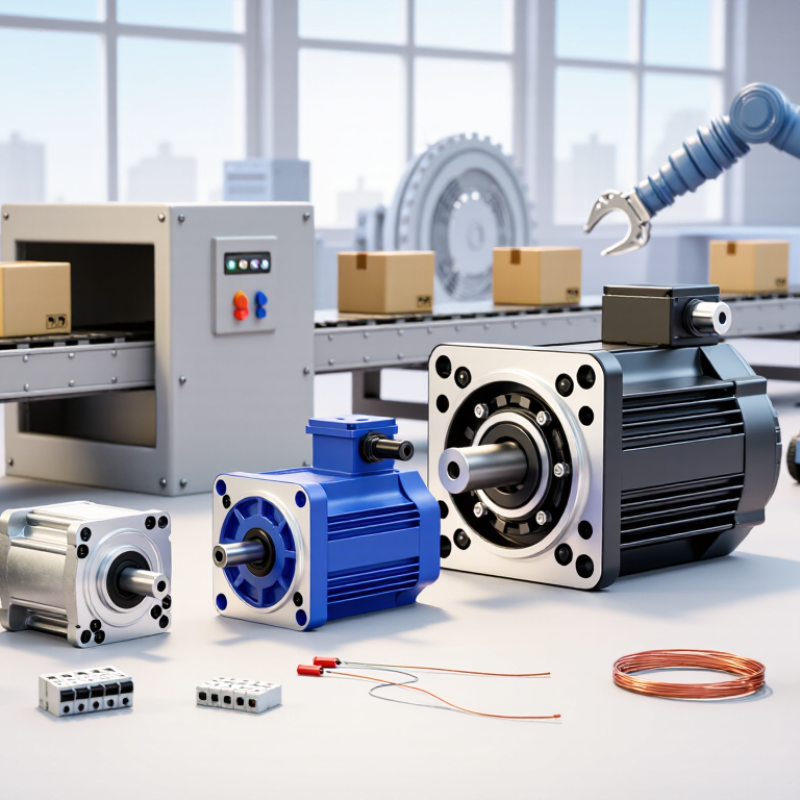
Define the Application Requirements and Operating Conditions
Choosing a powerful DC motor starts with the application, not the catalog rating. Define the load torque, target speed, acceleration, and duty cycle. A conveyor moving 20 kilograms may need high starting torque, even if its running load is modest. Measure the shaft load during startup, not only during steady movement. That brief peak can determine whether the motor stalls.
Operating conditions matter just as much. Record the available voltage and current limits before selecting a motor. Check ambient temperature, humidity, dust, vibration, and installation space. A motor operating inside a warm enclosure may lose performance as its temperature rises. Continuous operation also needs different thermal capacity than a five-second intermittent cycle. Leave practical margin for friction, misalignment, and future load changes. Too much margin, however, can increase cost and reduce efficiency.
My field experience suggests testing the complete drive system early. Include the gearbox, controller, wiring, and mounting structure. A motor may meet its rated torque but still perform poorly with voltage drop or an undersized controller. Listen for unusual noise and check the housing temperature after repeated cycles. One calculation is never enough. I once trusted a clean load estimate that ignored a heavy startup belt. The selected motor worked, but acceleration was disappointingly slow. Rechecking real measurements would have prevented that mistake. When conditions are uncertain, record several operating cycles and question every assumption.
How to Choose a Powerful DC Motor for Your Application? - Define the Application Requirements and Operating Conditions
| Application Requirement | Typical Design Range or Condition | Why It Matters | Recommended Selection Target |
|---|---|---|---|
| Continuous output power | 50 W–1 kW for compact industrial and mobile equipment | Power determines whether the motor can maintain the required speed under load. | Choose at least 20% more continuous power than the calculated operating requirement. |
| Rated speed | 1,000–4,000 rpm for many geared or direct-drive systems | Speed affects productivity, noise, vibration, and the need for a gearbox. | Select a motor whose efficient operating point is close to the required working speed. |
| Continuous load torque | 0.1–10 N·m, depending on motor size and transmission ratio | Torque is the motor's ability to overcome resistance and transmit mechanical force. | Use a continuous torque rating at least 25% above the calculated load torque. |
| Starting or peak torque | 1.5–3 times the running torque for high-inertia or friction-heavy loads | Insufficient starting torque can cause stalled starts, overheating, or controller trips. | Verify that peak torque is available for the full acceleration period without exceeding the motor's thermal limit. |
| Supply voltage | 12 V, 24 V, 36 V, or 48 V DC are common system voltages | Voltage compatibility affects current demand, insulation stress, controller selection, and wiring size. | Match the nominal motor voltage to the actual supply and allow for battery or power-supply variation. |
| Operating current | Running current commonly ranges from 2 A to 40 A in this power class | Current determines cable gauge, fuse size, connector rating, and controller capacity. | Rate the controller and protection devices for continuous current plus the required short-term starting current. |
| Duty cycle | Continuous duty, intermittent duty, or repeated cycles such as 30 seconds on / 90 seconds off | Motor heating depends on both load and operating time, not only peak power. | Use a continuous-duty rating for non-stop operation; calculate thermal loading for intermittent cycles. |
| Acceleration time | 0.5–5 seconds for many conveyors, actuators, and mobile mechanisms | Short acceleration times require additional torque and increase current draw. | Check motor, controller, battery, and gearbox ratings against the required acceleration profile. |
| Load inertia | Low inertia for fans; moderate to high inertia for rollers, flywheels, and rotating tooling | High inertia increases acceleration torque and may cause overshoot during stopping. | Use a lower gear ratio, higher peak torque, or controlled acceleration when inertia is high. |
| Speed regulation | Open-loop: moderate variation; closed-loop: typically within a few percent when correctly tuned | Load changes and supply-voltage changes can alter the speed of a basic DC motor. | Use feedback such as an encoder or tachometer when stable speed or precise positioning is required. |
| Gear reduction | Common ratios: 3:1–50:1 for low-speed, high-torque applications | A gearbox increases output torque and reduces speed, but introduces losses, backlash, and mechanical limits. | Allow for gearbox efficiency, commonly about 70%–95% depending on design and ratio. |
| Ambient temperature | Approximately −20°C to +60°C for many general-purpose installations | High temperature reduces available thermal margin and can shorten insulation and bearing life. | Derate the motor or improve cooling when ambient temperature is high or ventilation is restricted. |
| Environmental exposure | Indoor clean air, dusty areas, splash exposure, or outdoor installation | Dust, moisture, chemicals, and salt can damage brushes, bearings, windings, and connectors. | Select suitable enclosure protection, sealing, corrosion resistance, and maintenance access. |
| Control method | On/off, pulse-width modulation, current control, or closed-loop control | The control method affects starting behavior, efficiency, electromagnetic noise, and speed stability. | Use a controller with suitable voltage, continuous current, peak current, braking, and feedback capabilities. |
| Maintenance and service life | Brush replacement may be needed after extended operation; brushless designs reduce routine wear | Maintenance requirements influence downtime, accessibility, and total cost of ownership. | Choose a serviceable design for accessible equipment and a low-maintenance configuration for sealed or remote systems. |
FAQS
Measure shaft torque during startup, running, and acceleration. Include friction, load weight, and sudden resistance. A conveyor might need 1.8 N·m at startup but only 0.9 N·m while running. Add practical headroom, usually 25% to 50%. More is not always better.
Wattage does not show the complete operating behavior. Torque, speed, voltage, current, and duty cycle also matter. A high-wattage motor may still struggle with heavy startup loads. I once trusted power figures too much. The real machine performed differently.
Check both no-load speed and rated-load speed. A motor marked at 3,000 rpm may slow under resistance. Test it with the actual drum, belt, or wheel attached. No-load figures can mislead. Very easily.
Gear reduction can increase output torque and reduce output speed. It also creates efficiency losses and possible backlash. Check whether the machine needs smooth positioning or strong pulling force. A gearbox may solve one problem while adding another.
Match the motor voltage with the available power supply. Confirm continuous, startup, and stall current. Startup current may reach several times the running current. Thin wires can heat quickly. Measure it instead of guessing.
Cold grease, uneven loads, poor ventilation, and frequent starts increase stress. Record the motor temperature during testing. Five minutes can look acceptable. One hour may reveal overheating. Real conditions are often less friendly than calculations.
PWM control provides efficient speed adjustment. Closed-loop feedback improves speed accuracy when the load changes. Current limiting helps protect the motor during stalls. A simple controller may work initially, but it can lack useful protection.
Check efficiency near the actual working load, not only at maximum output. Identify whether operation is continuous, short-time, or intermittent. Repeated short bursts can still cause overheating. Record speed, torque, temperature, and cycle duration for a full shift. Spreadsheets are helpful, but imperfect.
Select practical thermal and torque margin without excessive oversizing. An oversized motor may cost more and reduce efficiency or control sensitivity. Recheck the choice after installation. The machine may behave differently than expected. That matters.
Conclusion
Choosing a Powerful DC Motor begins with a clear understanding of the application’s requirements and operating conditions. Consider the load type, required motion, available space, ambient temperature, dust or moisture exposure, and expected operating hours. These factors help determine whether a brushed or brushless motor is more suitable and establish the necessary power rating. The motor’s torque, speed, voltage, and current specifications must also match the equipment to ensure reliable starting, smooth operation, and adequate performance under peak loads.
Efficiency, control, and duty cycle are equally important when selecting a motor. Evaluate whether speed regulation, reversing, soft starting, or precise positioning is required, then choose a compatible controller and feedback method. Check continuous and intermittent duty ratings to prevent overheating and premature wear. Finally, compare reliability, mounting options, maintenance needs, installation complexity, and total ownership cost. A well-matched motor should deliver dependable output while minimizing energy use, downtime, and long-term maintenance expenses.
