7 Tips for Choosing the Right Compact Gear Motor?

Time:2026-09-16 Author:Amelia
0%

Selecting the right Compact Gear Motor is rarely a matter of choosing the smallest available unit. It is a design decision involving torque, speed, duty cycle, noise, efficiency, and service life. A motor that looks ideal on a specification sheet may overheat beside a conveyor, stall under repeated starts, or wear quickly in a dusty enclosure.

Industry data explains why this choice deserves closer attention. The International Energy Agency reports that electric motor systems consume roughly half of the world’s electricity. Meanwhile, MarketsandMarkets identifies automation, robotics, material handling, and medical equipment as important growth areas for gear motors. These sectors demand smaller drives with accurate motion and dependable thermal performance. The numbers are significant, but they do not replace application testing.

Austin Hughes, a respected motor-drive author, called the electric motor “the workhorse of industry.” His observation remains relevant for compact systems, where a few millimeters can affect cooling, mounting, and output alignment. In practice, engineers should compare measured torque at operating temperature, not only advertised peak values. That detail is often missed.

The following seven tips examine how to evaluate a Compact Gear Motor more intelligently. They cover load calculation, reduction ratio, efficiency, noise, protection ratings, installation limits, and supplier support. Some recommendations may seem obvious. They are still easy to overlook.

A small compromise can become a large failure. Examine the real workload, not the ideal one. Reliable selection comes from combining published data, practical experience, and a willingness to question incomplete specifications.
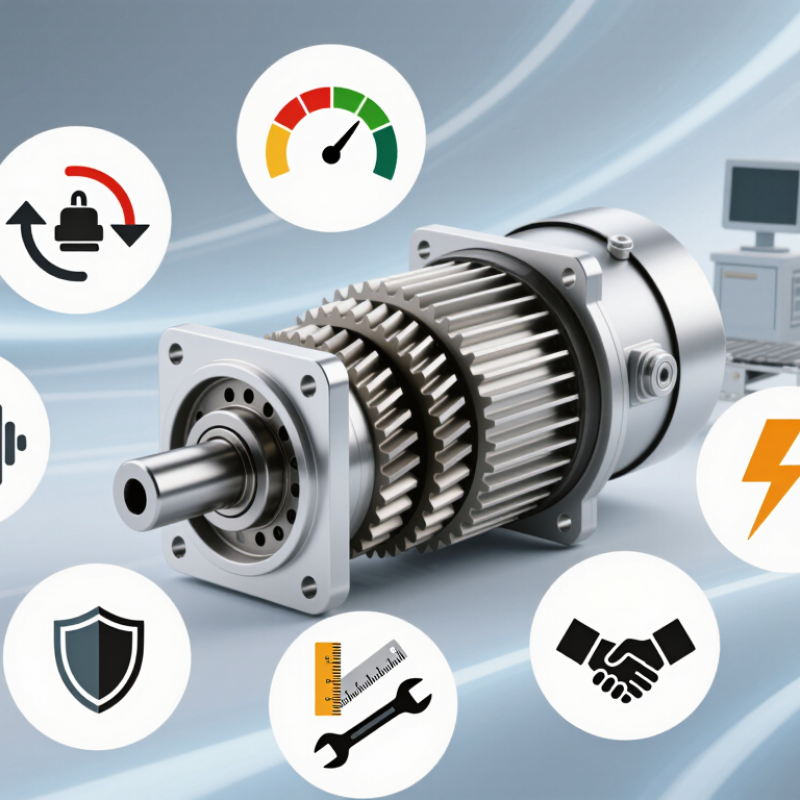
7 Tips for Choosing the Right Compact Gear Motor?

Define the Application Requirements for a Compact Gear Motor

Before choosing a compact gear motor, define what the mechanism must actually do. Measure the required output torque, speed, rotation direction, and operating time. A small conveyor may need steady torque, while a valve actuator may demand high starting torque. Do not estimate load from appearance alone. Friction, acceleration, and misalignment can increase the real demand.

Check the available voltage and current carefully. Confirm whether the motor runs continuously, intermittently, or through frequent starts and stops. Duty cycle matters. So does heat. In a compact housing, limited airflow can raise winding temperature quickly. Leave a practical torque margin, but avoid excessive oversizing because it can waste energy and space. A simple load test with a prototype often reveals assumptions that calculations miss.

The installation area also defines the correct motor. Record the maximum diameter, length, shaft position, mounting holes, and allowable weight. Consider noise, backlash, vibration, and outdoor exposure if the equipment operates near people or moisture. Review the technical datasheet, not only the headline speed. Rated torque and peak torque are different. This distinction is easy to overlook. If the application changes later, the original selection may no longer be reliable, so document the measured load and operating temperature during testing.

Match Motor Torque, Speed, and Power to the Intended Load

7 Tips for Choosing the Right Compact Gear Motor?

Match Motor Torque, Speed, and Power to the Intended Load

A compact gear motor should be chosen from the load backward. Measure the required output torque, operating speed, and available power. Do not rely on motor size alone. A small conveyor may need 0.8 Nm at 60 rpm, but its starting torque can exceed 1.5 Nm. That brief demand matters.

Check both continuous and peak torque. Gearbox efficiency also reduces usable output. The basic relationship is power equals torque multiplied by angular speed. Higher torque at low speed can still require modest power. However, frequent starts, stops, or reversals create extra heat. Allow a practical service margin, but avoid excessive oversizing. It can increase cost and reduce efficiency.

I once treated a steady load as the worst case. It was not. The motor stalled during a loaded restart. That mistake changed my selection process. Test the real load, including friction, incline, shock, and startup resistance. Then compare the motor’s rated speed under load, not its unloaded speed. Confirm voltage, current, duty cycle, and thermal limits. Measure the gearbox backlash when positioning accuracy matters. Keep wiring losses in mind. They are easy to overlook. A motor that matches the calculation may still perform poorly in a warm, confined enclosure. Leave room for airflow and inspect the actual mounting conditions before final approval.

Choose the Most Suitable Gearbox Type and Reduction Ratio

Choosing the right compact gear motor starts with the gearbox, not the motor label. The International Energy Agency estimates that electric motor systems consume about 46% of global electricity. Small efficiency losses can therefore become costly over long operating hours. The U.S. Department of Energy also reports that motor-driven equipment uses nearly 69% of industrial electricity in the United States. That makes gearbox selection an energy decision.

Match the gearbox type to the load and movement. Spur gears suit simple, economical applications with moderate torque. Helical gears run more quietly and handle continuous duty better. Planetary gearboxes provide high torque density, useful when installation space is limited. Worm gears offer high reduction in one stage, but sliding contact can create more heat and lower efficiency. Check the datasheet carefully. Claimed efficiency may depend on speed, lubricant, and load.

Choose the reduction ratio from the required output speed and torque. A 1,800 rpm motor with a 30:1 ratio produces about 60 rpm before slip and losses. Higher ratios increase output torque, but they can also reduce efficiency and response speed. Select the smallest ratio that meets the real operating requirement. AGMA guidance emphasizes rating gears for load, life, lubrication, and service conditions. A common mistake is sizing only for average torque. Starting torque, shock loads, and frequent reversing may matter more. Recheck the calculation. Real machines are rarely as gentle as the spreadsheet.

7 Tips for Choosing the Right Compact Gear Motor

Compare common gearbox types by their typical single-stage reduction-ratio range. Choose the gearbox type and ratio according to speed, torque, efficiency, duty cycle, noise, available space, and backlash requirements.

Spur and helical gearboxes usually provide moderate ratios with good efficiency. Planetary gearboxes offer high torque density and low backlash. Bevel gearboxes are useful when the output direction must change, while worm gearboxes provide large ratios in a compact package but generally have lower efficiency. The ranges shown are representative engineering values; actual performance depends on the design, load, lubrication, and operating conditions.

Evaluate Size, Efficiency, Materials, and Operating Conditions

7 Tips for Choosing the Right Compact Gear Motor

Evaluate Size, Efficiency, Materials, and Operating Conditions

Start with the load, not the motor’s appearance. Measure required torque, speed, duty cycle, and starting resistance. Measure twice. A compact housing can still hide insufficient thermal capacity. The International Energy Agency estimates that electric motor systems consume about half of global electricity, making efficiency a practical design concern. Choose a motor with suitable efficiency, but compare performance at your actual load. Peak ratings can mislead.

Check the gear ratio and output shaft dimensions carefully. Confirm radial loads, axial loads, backlash, and mounting clearance. Select steel gears for demanding torque, while engineered polymers may reduce noise and weight. Materials must also match dust, moisture, chemicals, and temperature. Heat matters. The U.S. Department of Energy’s motor-system guidance emphasizes proper sizing, maintenance, and operating conditions as key energy-saving measures. A motor running near its thermal limit may fail long before its advertised service life.

Review the duty classification and starts per hour. Continuous operation needs better heat dissipation than occasional positioning. Verify voltage, control method, braking needs, and stall protection. Ask for measured efficiency curves, noise data, and life-test conditions. I once oversized a small drive, expecting extra reliability; it consumed more space and performed poorly at light load. That mistake still influences my selections. Do not guess. Leave room for mounting errors, but avoid buying capacity that the application never uses. Industry test methods, such as IEC 60034-30-1, can help compare motor efficiency classes consistently.

Verify Reliability, Mounting Options, Maintenance, and Supplier Support

Choosing the Right Compact Gear Motor: 7 Practical Tips

Tip 1: Verify reliability through documented endurance tests, not attractive claims. Check rated torque, duty cycle, noise, backlash, and operating temperature. A motor that survives a clean laboratory test may struggle beside dust, vibration, or frequent starts.

Tip 2: Match the motor to real loads. Measure startup torque, not only running torque. I once underestimated acceleration resistance, and the motor overheated during repeated cycles. That mistake was avoidable.

Tip 3: Inspect mounting options before ordering. Compare flange dimensions, shaft diameter, bolt patterns, and cable direction with your equipment drawings. A compact housing saves space only when installation remains practical.

Tip 4: Confirm alignment tolerances. Small angular errors can create noise, wear, and unexpected bearing loads.

Tip 5: Ask about maintenance access. Sealed construction may reduce servicing, but it does not remove inspection needs. Check lubrication guidance, expected service intervals, replaceable parts, and safe cleaning methods.

Tip 6: Evaluate supplier support beyond sales communication. Reliable suppliers provide load calculations, technical drawings, test data, installation guidance, and responsive troubleshooting. Request samples or reference applications when possible.

Tip 7: Clarify quality control and delivery consistency. Ask how units are tested, recorded, and packaged. One overlooked detail is spare availability; a failed motor can stop an otherwise complete machine. I would also question vague warranties. They may sound reassuring, yet unclear exclusions can create delays when problems appear.

FAQS

What should be measured before choosing a compact gear motor?

Measure torque, speed, duty cycle, and starting resistance. A compact body can still lack thermal capacity. Measure twice.

Why should efficiency be checked at the actual load?

Peak efficiency ratings may not reflect real operation. Compare measured performance near your expected torque and speed.

How should the gear ratio and shaft be verified?

Confirm the gear ratio, shaft diameter, radial load, axial load, backlash, and mounting clearance. Small mismatches can create noise or early wear.

Which materials suit different operating conditions?

Steel gears suit demanding torque. Engineered polymers can reduce noise and weight. Match materials with dust, moisture, chemicals, and temperature.

How does duty cycle affect motor selection?

Continuous operation needs stronger heat dissipation than occasional positioning. Check starts per hour, operating time, voltage, braking, and stall protection.

What reliability evidence should be requested?

Request documented endurance tests, noise data, backlash measurements, and temperature limits. Laboratory results may not represent dusty, vibrating equipment.

What mounting details need checking before ordering?

Compare flange dimensions, shaft diameter, bolt patterns, cable direction, and alignment tolerances. A compact housing helps only when installation remains practical.

What maintenance and supplier support should be confirmed?

Ask about lubrication, inspection intervals, replaceable parts, cleaning methods, drawings, test records, and spare availability. Vague warranties deserve questions. I once oversized a drive, expecting better reliability. It wasted space and performed poorly under light load.

Conclusion

Choosing the right Compact Gear Motor begins with clearly defining the application requirements, including load type, operating time, available space, motion accuracy, and environmental conditions. Match the motor’s torque, speed, and power to the intended load, allowing enough capacity for starting forces and occasional variations. Next, select a suitable gearbox type and reduction ratio based on the desired output speed, efficiency, noise level, and control requirements.

It is also important to evaluate the motor’s overall size, energy efficiency, construction materials, and ability to operate in conditions such as dust, moisture, heat, or vibration. Before making a final decision, verify reliability through performance specifications and expected service life. Check mounting options, maintenance needs, replacement accessibility, and technical support. A carefully selected Compact Gear Motor should provide stable performance, efficient power transmission, easy integration, and dependable operation throughout its working life.

Amelia

Amelia

Amelia is a seasoned marketing professional with a wealth of expertise in our company’s core offerings. With an unwavering passion for driving growth and innovation, she plays a pivotal role in shaping our marketing strategies and enhancing brand visibility. A key aspect of her responsibilities......