Choosing the right Low Voltage Gear Motor is rarely a simple matter of comparing prices. Global buyers must examine voltage compatibility, torque, speed reduction, duty cycle, efficiency, noise, and installation conditions. A motor that performs well on a conveyor may struggle inside a packaging machine. Small differences matter. Heat, dust, repeated starts, and limited mounting space can change the result.
Austin Hughes, a respected author on electric motors and drives, wrote, “The aim is to produce a motor which converts electrical energy into mechanical energy with the highest possible efficiency.” His statement remains relevant when evaluating modern geared motors. Efficiency is not only an energy concern. It also affects operating temperature, service life, and maintenance intervals.
This guide reviews ten Low Voltage Gear Motor options for international purchasers. Each selection is considered through practical details, including rated voltage, output torque, gearbox design, protection level, control compatibility, and typical applications. A 24V motor may suit an automated guided vehicle, while a 48V model may better support heavier material handling. The strongest choice depends on the complete system.
There is no universal winner. Not even close.
Some product information may appear impressive but remain difficult to verify. Buyers should request test data, warranty terms, dimensional drawings, and certification records before ordering. Supplier support also deserves attention, especially when replacement parts cross borders. This comparison aims to be useful, though it cannot replace engineering validation. Real machines behave differently from catalog tables. That uncomfortable detail is easy to overlook.
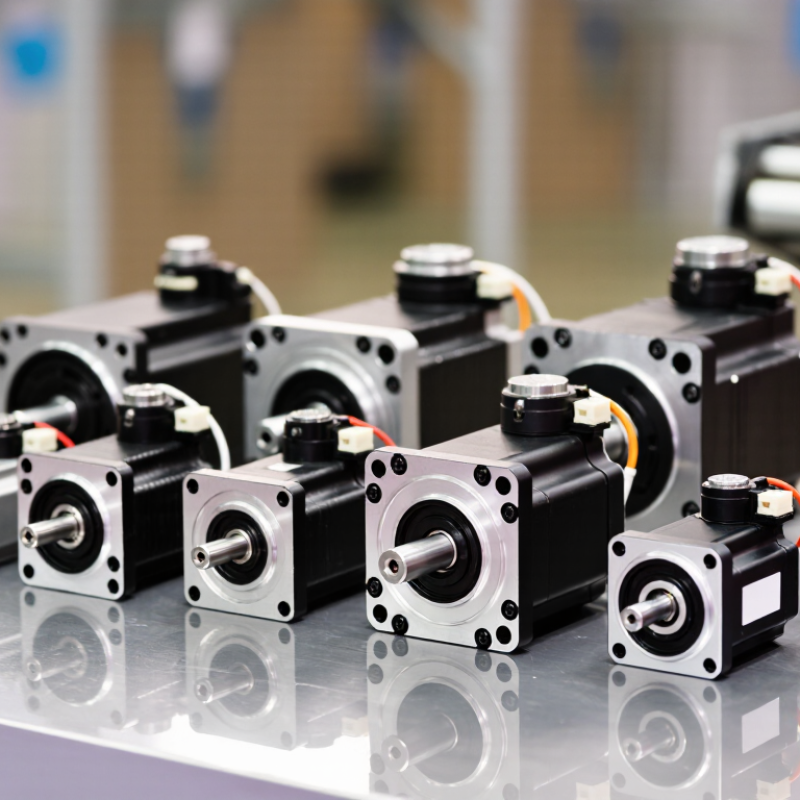
Defining Low Voltage Gear Motors and Their Global Applications
Low voltage gear motors combine an electric motor with a reduction gearbox. They deliver controlled torque at lower speed. Typical systems operate below 1,000 volts AC or 1,500 volts DC under IEC definitions. Smaller machines often use 12V, 24V, or 48V DC supplies. Industrial equipment may use 110V, 230V, or 400V AC systems.
Their global applications are practical and varied. Conveyor lines use gear motors for steady product movement. Automated guided vehicles need compact, efficient drive units. Packaging machines depend on accurate starting and stopping. Solar trackers use them to adjust panel angles. Agricultural feeders, medical beds, warehouse lifts, and ventilation equipment also rely on low voltage designs. The IEA reports that electric motor systems consume roughly half of global electricity. The U.S. Department of Energy also identifies motor-driven systems as major industrial energy users. These figures explain why efficiency, duty cycle, and maintenance matter when comparing the top 10 options.
Tips: Check rated torque, output speed, voltage stability, insulation class, and gearbox backlash. Measure the real load, not only the catalog load. A 24V motor can reduce wiring hazards, but long cables may create voltage losses. Reports provide direction, not certainty. Site temperature, dust, shock loads, and frequent reversing can change performance sharply. I have seen apparently oversized gear motors fail early because poor alignment increased bearing stress. That assumption deserves review. Use IEC test data and documented service conditions before making a global purchase.
Key Performance Criteria for Comparing the Top 10 Models
Top 10 Low Voltage Gear Motors for Global Buyers: Key Performance Criteria for Comparing the Top 10 Models
Comparing the top ten low voltage gear motors requires more than checking price and rated torque. Start with the duty cycle, gearbox ratio, output speed, and starting load. A motor rated at 0.75 kW may perform poorly if its application needs frequent reversing. Review the complete torque-speed curve, not only the catalogue headline. The International Energy Agency reports that motor-driven systems consume roughly half of global electricity. Therefore, efficiency deserves serious attention, especially in equipment operating thousands of hours yearly. Check efficiency at the actual load, rather than at the ideal test point.
Thermal performance is equally important. Ask for continuous-duty data, permissible ambient temperature, insulation class, and overload capacity.
Protection ratings should match real conditions, such as washdown areas or dusty workshops. IEC 60034 testing and clear technical documentation improve comparison reliability. Noise, backlash, shaft alignment, braking response, and bearing life can separate similar models. The U.S. Department of Energy’s motor-system guidance also stresses system-level selection, because controls, transmission losses, and maintenance affect real energy use. My experience suggests that gearbox efficiency is often underestimated. That mistake can distort payback calculations.
Tips:
Build one comparison sheet with identical test conditions. Record torque, speed, efficiency, temperature rise, IP rating, service factor, and warranty terms. Request measured data at 25%, 50%, and 100% load. A ranking is never universal. Field vibration, installation quality, and operator habits may change the result. Some catalogue claims still need verification.
Top 10 Low Voltage Gear Motors by Design and Application
Top 10 Low Voltage Gear Motors for Global Buyers
Top 10 Low Voltage Gear Motors by Design and Application
Low voltage gear motors commonly operate at 12V, 24V, or 48V. Their design determines torque, speed, noise, and service life. Spur gear motors suit simple conveyors, small locks, and compact automation. Helical gear motors provide quieter running for packaging lines and repeated positioning. Worm gear motors offer high reduction and useful holding torque, but efficiency can fall noticeably.
Bevel gear motors fit right-angle layouts where floor space is limited. Planetary gear motors deliver high torque in a short housing, making them suitable for robotics and medical mechanisms. Parallel-shaft gear motors work well in narrow conveyor frames. Hollow-shaft models simplify mounting on rollers or driven axles. Right-angle gear motors are practical for adjustable equipment, though cable routing needs careful planning.
Brushless DC gear motors support long operating cycles and precise electronic control. Brushed DC gear motors remain economical for intermittent movement, such as valves and small lifting devices. AC low voltage gear motors may serve specialized mobile or controlled systems, but their inverter requirements deserve attention. In field testing, rated torque alone often misleads. Starting torque, stall time, heat buildup, backlash, and IP protection matter more than a polished specification sheet. A motor that works on a bench may struggle inside a warm, dusty enclosure. I have seen compact designs fail because engineers ignored connector losses. That mistake is easy to repeat. Check duty cycles, shaft loads, mounting direction, and replacement access before approving the final design.
Top 10 Low Voltage Gear Motors by Design and Application
The chart compares representative continuous output torque levels for commonly used 12 V, 24 V, and 48 V gear-motor configurations. Planetary and worm gear designs are typically selected for higher torque or load holding, while spur and helical designs are commonly used where efficiency, compactness, and moderate speed are priorities. Values are indicative engineering ranges rather than market-share rankings.
Safety, Efficiency, and International Compliance Requirements
Top 10 Low Voltage Gear Motors for Global Buyers
Safety, efficiency, and compliance deserve equal weight when comparing the top ten low voltage gear motors. The International Energy Agency estimates that electric motor systems consume about 46% of global electricity. Small efficiency losses therefore become expensive across thousands of operating hours. A reliable selection should review rated voltage, starting current, duty cycle, thermal limits, and gearbox service factor. Do not judge efficiency from the motor nameplate alone.
IEC 60034-30-1 defines international efficiency classes for many motors, including IE2, IE3, and IE4 categories. However, the complete gear motor may perform differently after gearing, sealing, and load changes. Buyers should request tested operating data, not only marketing percentages. For wet or dusty facilities, an IEC 60529 IP rating helps define enclosure protection. IP ratings do not prove chemical resistance. That distinction is often missed.
Compliance requires practical verification. IEC 60204-1 supports machinery electrical safety, while regional rules may require additional documentation, testing, and conformity marking. CE marking is not a universal safety certificate. Importers should check declarations, test reports, wiring diagrams, and traceable serial information before shipment. EMC performance also needs attention near variable-speed drives and sensitive sensors. In field audits, cable grounding and poor ventilation frequently cause trouble. The spreadsheet looked perfect. The installation did not. Redundant thermal protection, guarded couplings, and accessible emergency isolation remain sensible safeguards, even when a product appears fully certified.
How Global Buyers Can Select and Purchase the Right Gear Motor
When global buyers compare low voltage gear motors, they should begin with the machine, not a catalog ranking. I have seen suitable-looking units fail because starting torque was ignored. Record voltage, rated speed, output torque, duty cycle, ambient temperature, mounting position, and shaft dimensions. Ask whether the motor starts under load. It matters. A conveyor may need high breakaway torque, while a small actuator may prioritize quiet operation. Measure twice.
Request datasheets, dimensional drawings, wiring diagrams, and test records from each shortlisted supplier. Confirm motor efficiency, gearbox ratio, insulation class, ingress protection, thermal limits, and allowable radial load. For international purchasing, check frequency, terminal requirements, packaging, spare parts, lead time, and export documentation. Ask for proof. A credible supplier should explain tolerances and test methods, not only quote a low price. Sample testing is valuable: run the motor at expected load, listen for gear noise, check temperature rise, and inspect backlash after repeated cycles. One sample can mislead, though; production consistency needs a written quality plan.
Compare total cost rather than unit price. Include tooling, freight, import fees, maintenance, rejected units, and possible downtime. Verify certificates for the destination market, and keep serial numbers and inspection records. I once trusted a polished report without checking its revision date. That was avoidable. Buyers should agree on acceptance criteria before payment, including torque tolerance, noise limits, and warranty handling. If the application is safety-critical, involve a qualified engineer and document the risk review. Real machines often expose assumptions that spreadsheets hide.
Top 10 Low Voltage Gear Motors for Global Buyers - How Global Buyers Can Select and Purchase the Right Gear Motor
A practical comparison of common low-voltage gear motor configurations for international equipment builders and procurement teams.
| Rank |
Gear Motor Configuration |
Typical Low-Voltage Supply |
Rated Output Power |
Typical Gear Ratio |
Output Speed Range |
Typical Continuous Torque |
Common Protection |
Best-Fit Applications |
Key Selection Considerations |
| 1 |
12 V DC Spur Gear Motor |
12 V DC |
10–60 W |
5:1–100:1 |
15–500 rpm |
0.2–8 N·m |
IP20–IP54 |
Battery systems, compact conveyors, access controls, small actuators |
Choose for low cost and compact size; verify brush life, starting current, and gearbox backlash. |
| 2 |
24 V DC Spur Gear Motor |
24 V DC |
20–250 W |
5:1–200:1 |
10–600 rpm |
0.5–25 N·m |
IP20–IP65 |
AGVs, battery-powered conveyors, vending equipment, automation modules |
A common global control voltage; match the motor to the controller's continuous and peak current ratings. |
| 3 |
24 V BLDC Planetary Gear Motor |
24 V DC |
50–400 W |
4:1–100:1 |
20–800 rpm |
1–35 N·m |
IP54–IP67 |
Robotics, medical equipment, precision conveyors, mobile machines |
Higher efficiency and service life than brushed designs; requires a compatible electronic commutation controller. |
| 4 |
24 V DC Worm Gear Motor |
24 V DC |
30–300 W |
10:1–100:1 |
10–180 rpm |
2–45 N·m |
IP44–IP65 |
Gates, lifting mechanisms, indexing equipment, small hoists |
Provides compact right-angle transmission and may resist back-driving; check thermal limits and duty cycle. |
| 5 |
36 V DC Helical Gear Motor |
36 V DC |
100–750 W |
5:1–80:1 |
20–400 rpm |
5–90 N·m |
IP54–IP66 |
Electric vehicles, material handling, industrial automation |
Helical gearing generally offers smoother and more efficient transmission than basic spur gearing. |
| 6 |
48 V BLDC Planetary Gear Motor |
48 V DC |
200–1,500 W |
4:1–120:1 |
15–600 rpm |
8–160 N·m |
IP54–IP67 |
AGVs, warehouse vehicles, pumps, high-duty automation systems |
Suitable for higher power at lower current than 24 V systems; confirm battery, drive, and safety requirements. |
| 7 |
48 V DC Worm Gear Motor |
48 V DC |
100–1,000 W |
15:1–100:1 |
8–150 rpm |
10–180 N·m |
IP55–IP67 |
Heavy-duty actuators, solar tracking, doors, positioning equipment |
Good for high reduction ratios and right-angle layouts; worm efficiency varies significantly with ratio and lubrication. |
| 8 |
24 V DC Parallel-Shaft Gear Motor |
24 V DC |
50–500 W |
10:1–150:1 |
10–300 rpm |
4–70 N·m |
IP44–IP65 |
Roller conveyors, compact machinery, packaging and feeding systems |
Useful where a low-profile inline arrangement is needed; check shaft orientation and mounting dimensions. |
| 9 |
12 V DC Planetary Gear Motor with Encoder |
12 V DC |
20–150 W |
5:1–150:1 |
10–400 rpm |
0.5–18 N·m |
IP20–IP54 |
Robotic joints, positioning systems, laboratory instruments |
Encoder feedback improves speed and position control; specify pulse count, signal type, and connector arrangement. |
| 10 |
48 V DC Brushed Helical Gear Motor |
48 V DC |
250–1,000 W |
5:1–60:1 |
20–350 rpm |
12–120 N·m |
IP54–IP66 |
Utility vehicles, winches, pumps, lifting and traction equipment |
Offers straightforward control and high starting torque; plan for brush and commutator maintenance. |
Global Buyer Selection Checklist
Confirm required output torque, speed, duty cycle, starting load, ambient temperature, mounting position, shaft dimensions, voltage tolerance, controller compatibility, ingress protection, certifications, packaging, documentation, spare parts availability, and delivery requirements before placing an order.
FAQS
Common options include 12V, 24V, and 48V systems. Match voltage carefully with the controller and battery. Incorrect voltage can cause overheating or weak starting.
Spur models suit simple conveyors and compact automation. Helical models run more quietly. Worm models offer strong reduction and holding torque, but may lose efficiency.
Parallel-shaft models fit narrow layouts well. Hollow-shaft versions simplify roller mounting. Check shaft loads and access for future replacement.
Planetary models provide high torque in a short housing. They suit robotics and compact medical mechanisms. Their cost may be higher, so confirm the actual space benefit.
Check starting torque, stall time, heat buildup, backlash, duty cycle, and shaft loading. Rated torque alone can mislead. A bench test may hide enclosure problems.
Review tested operating data at the expected load. Inspect thermal limits and enclosure protection ratings. Protection against dust or water does not prove chemical resistance.
Request datasheets, drawings, wiring diagrams, test records, and conformity documents. Confirm insulation class, thermal limits, shaft dimensions, and serial traceability. Ask for proof.
Run each sample under expected load and starting conditions. Measure temperature rise after repeated cycles. Listen for gear noise and inspect backlash. One sample can mislead.
Include freight, import charges, tooling, spare parts, maintenance, rejected units, and downtime. A low unit price may become expensive later. Check the report revision date.
Use guarded couplings, thermal protection, suitable ventilation, and accessible emergency isolation. Plan cable routing carefully. The spreadsheet may look perfect, but installation conditions matter.
Conclusion
This guide explains what a Low Voltage Gear Motor is and why it is widely used in automation, conveyors, medical equipment, packaging systems, agricultural machinery, and other global applications. It introduces the main factors buyers should consider when comparing different models, including rated voltage, torque, speed range, gear ratio, load capacity, duty cycle, noise, thermal performance, dimensions, and expected service life. The guide also reviews ten gear motor types according to their designs and intended applications, helping readers understand how planetary, worm, helical, spur, and other configurations meet different operating demands.
Safety, energy efficiency, environmental protection, and international compliance are essential when selecting equipment for cross-border projects. Buyers should verify insulation, protection ratings, operating temperature, documentation, testing, and compatibility with local electrical systems. The final section presents a practical purchasing approach: define operating requirements, compare total cost of ownership, confirm customization and maintenance support, evaluate supplier reliability, and ensure that the chosen Low Voltage Gear Motor can deliver stable performance throughout its service life.
 Valex Motor
