2026 Top Electric Drive Motor Types for Global Buyers

Time:2026-09-06 Author:Isabella
0%

Choosing the right Electric Drive Motor in 2026 requires more than comparing rated power and efficiency. Global buyers must evaluate application conditions, supply reliability, service support, and long-term operating costs. A motor driving a warehouse conveyor faces different demands from one powering an electric vehicle, water pump, or robotic arm. The best selection begins with real operating data.

This guide examines major motor types, including induction motors, permanent magnet synchronous motors, brushless DC motors, switched reluctance motors, synchronous reluctance motors, and emerging axial-flux designs. Each option presents a different balance of torque, speed range, thermal performance, maintenance, and material dependence. For example, an induction motor may tolerate harsh industrial conditions, while a permanent magnet motor can deliver strong efficiency within a compact housing. Small details matter. A dusty plant, frequent starts, or limited cooling can change the final decision.

Specifications still need careful interpretation. Some datasheets highlight peak efficiency but omit continuous overload behavior, acoustic performance, or controller compatibility. That can mislead buyers. Voltage standards, inverter quality, ingress protection, bearing design, insulation class, and local technical support should receive equal attention. Certification requirements also vary between markets, so procurement teams should verify current regional standards before ordering.

There is no universal winner. A lower purchase price may create higher energy or maintenance costs later. Conversely, the most advanced motor may be unnecessary for a simple pump. This article offers a practical, evidence-based comparison for engineers, distributors, and purchasing managers. It also recognizes a difficult reality: motor selection often involves incomplete data, changing supply chains, and compromises that deserve honest review.
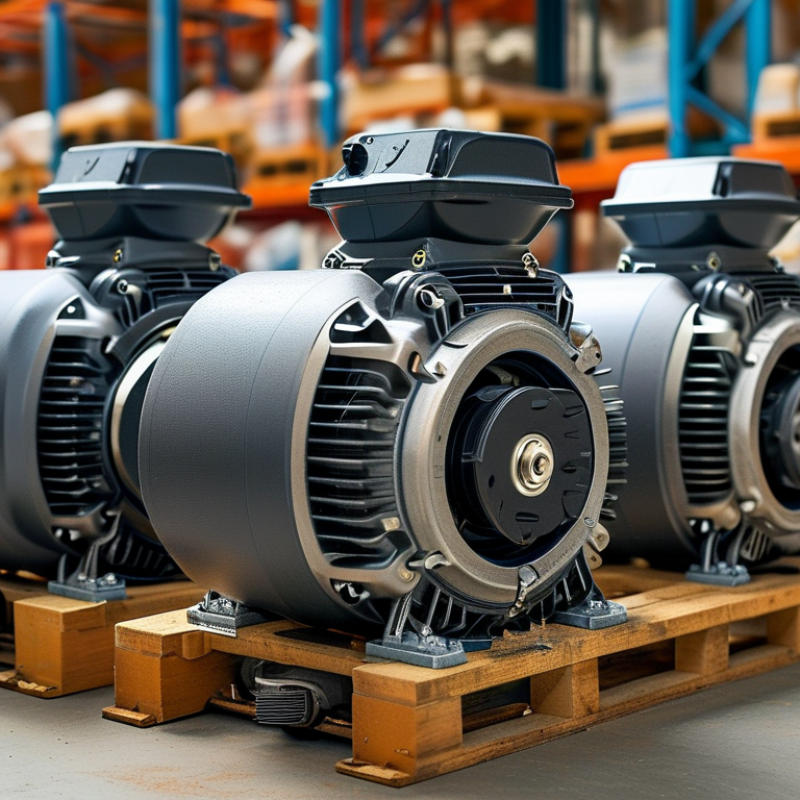
2026 Top Electric Drive Motor Types for Global Buyers

Electric Drive Motor Basics and Classification

Electric drive motors convert electrical energy into controlled mechanical torque. Their classification begins with the power source: alternating current (AC) or direct current (DC). DC motors use brushes and a commutator, creating simple control but regular wear. Brushless DC motors replace mechanical switching with electronic commutation. AC families include induction motors, permanent-magnet synchronous motors, and synchronous reluctance motors. Induction designs tolerate harsh duty well. Permanent-magnet designs deliver high efficiency and compact torque. Synchronous reluctance motors avoid magnets, but their control can be less forgiving.

Tips: Match motor type with load profile, not peak power alone. Check continuous torque, starting torque, speed range, cooling method, and controller compatibility. A motor rated for 100 kW may overheat under constant high load. Measure the real duty cycle.

Radial-flux motors remain common because their manufacturing ecosystem is mature. Axial-flux motors can reduce length and weight, although thermal management remains a practical concern. For pumps, fans, conveyors, and traction systems, the best choice differs.

In field evaluations, efficiency at the usual operating point matters more than a laboratory maximum. A neat classification can still mislead. Two motors with identical ratings may behave differently under dust, vibration, or frequent starts. Buyers should request test conditions, insulation class, ingress protection, and service data. I would also challenge incomplete specifications; missing duty information often creates expensive redesigns.

Key Electric Drive Motor Types in 2026

In 2026, electric drive motor selection depends on the load profile, not headline efficiency. Permanent magnet synchronous motors deliver high efficiency and strong torque in compact traction systems. Interior permanent magnet designs handle wide speed ranges through field weakening. They suit vehicles, robotics, and pumps where space and energy costs matter. Rare-earth material pricing remains a concern. That risk deserves attention.

Induction motors use robust copper windings and avoid permanent magnets. They tolerate harsh environments and can be easier to source globally. However, rotor losses may increase cooling demands during continuous high-load operation. Brushless DC motors provide simple electronic commutation for fans, tools, and light mobility equipment. Their performance depends heavily on controller tuning and sensor feedback. Switched reluctance motors use rugged rotors and operate without magnets. Noise and torque ripple still need careful engineering.

Synchronous reluctance motors offer magnet-free operation with good efficiency in industrial drives. They require accurate control during low-speed operation and rapid load changes. Axial-flux motors can reduce package length, but manufacturing consistency and cooling remain challenging. From field evaluations, buyers should compare peak torque, continuous torque, duty cycle, ingress protection, acoustic output, and service access. Check inverter compatibility before approving samples. A motor that performs well on a test bench may disappoint in dusty factories or cold ports. Specifications are not enough.

2026 Top Electric Drive Motor Types for Global Buyers - Key Electric Drive Motor Types in 2026

A practical comparison of major electric drive motor technologies used in passenger vehicles, commercial vehicles, industrial equipment, robotics, pumps, compressors, and other electrified systems.

Motor Type Operating Principle Typical Power Range Typical Peak Efficiency Torque Characteristics Control and Drive Requirements Cooling Options Main Advantages Key Limitations Common 2026 Applications
Permanent Magnet Synchronous Motor (PMSM) Uses permanent magnets on or inside the rotor and a synchronized rotating magnetic field generated by three-phase stator windings. Approximately 1 kW to more than 500 kW, depending on the system. About 90%–97% High starting torque, strong torque density, and efficient operation across a broad speed range with suitable field-weakening control. Requires an inverter with precise position or sensorless rotor control; commonly paired with vector control or field-oriented control. Natural air, forced air, water jacket, or oil spray cooling. High efficiency, compact size, low operating noise, and excellent power-to-weight ratio. Permanent-magnet material cost, thermal demagnetization risk, and dependence on sophisticated inverter control. Electric passenger vehicles, e-axles, electric buses, traction systems, industrial servo drives, and high-efficiency pumps.
Interior Permanent Magnet Motor (IPMSM) Permanent magnets are embedded inside the rotor, combining magnetic torque with reluctance torque. Approximately 10 kW to more than 500 kW. About 92%–97% High torque density and strong constant-power performance; suitable for high-speed traction duty. Needs a high-performance inverter and advanced current-angle management for maximum torque per ampere and field weakening. Water jacket, oil cooling, or combined stator and rotor cooling. Excellent efficiency, high-speed capability, compact packaging, and strong regenerative-braking performance. More complex rotor construction, magnet-related cost, and demanding manufacturing tolerances. Electric cars, hybrid vehicles, electric commercial vehicles, and high-performance traction drives.
Surface-Mounted Permanent Magnet Motor (SPMSM) Permanent magnets are mounted on the outer surface of the rotor and interact with the rotating stator field. Approximately 0.1 kW to 100 kW. About 88%–96% Very smooth torque and high efficiency at low and medium speeds; high-speed operation may require additional mechanical protection. Uses sinusoidal or vector-controlled inverters, generally with rotor-position feedback for demanding applications. Natural air, forced air, or water cooling. Simple electromagnetic design, low torque ripple, quiet operation, and compact construction. Lower mechanical strength at very high speed and reduced field-weakening capability compared with many IPMSM designs. Servo systems, robotics, fans, medical equipment, laboratory equipment, and light electric mobility.
Induction Motor (Asynchronous Motor) Rotor current is induced by the rotating magnetic field of the stator; the rotor operates with a small slip relative to synchronous speed. Approximately 0.5 kW to more than 1 MW. About 85%–96% Reliable starting and overload performance, with torque controlled electronically over a wide speed range. Usually driven by a variable-frequency inverter using vector control or direct torque control; no permanent magnets are required. Totally enclosed fan cooling, forced air, water jacket, or liquid cooling for high-power systems. Robust construction, mature supply chain, no magnet material, good high-speed durability, and relatively low rotor cost. Lower efficiency at light load, higher rotor losses, and generally lower torque density than permanent-magnet designs. Industrial machinery, compressors, conveyors, pumps, electric buses, traction systems, and heavy-duty equipment.
Synchronous Reluctance Motor (SynRM) Produces torque from the rotor's magnetic reluctance differences rather than rotor windings or permanent magnets. Approximately 1 kW to 500 kW. About 90%–96% Good efficiency at rated load and effective constant-power operation when paired with appropriate control; torque ripple can require mitigation. Requires an inverter and rotor-position estimation or sensing; field-oriented control is commonly used. Air cooling, water jacket, or frame cooling. No permanent magnets, low rotor electrical losses, good thermal tolerance, and reduced exposure to magnet-material price changes. Lower torque density than many PM motors, greater sensitivity to control quality, and possible acoustic noise or torque ripple. Industrial pumps, fans, compressors, conveyors, machine tools, and energy-efficient general-purpose drives.
Permanent-Magnet-Assisted SynRM (PMa-SynRM) Combines a reluctance rotor with a limited amount of permanent-magnet material to increase torque and efficiency. Approximately 5 kW to 500 kW. About 91%–97% Higher torque density than a standard SynRM, with strong efficiency over variable-load operating cycles. Requires inverter-based vector control and careful management of current angle and field weakening. Air, water jacket, or oil cooling. Lower magnet usage than many conventional PM motors, high efficiency, and a balance between torque density and material cost. Rotor design and control are more complex than standard induction motors; magnets still introduce cost and thermal considerations. Industrial drives, high-efficiency pumps, compressors, HVAC equipment, and selected electric traction systems.
Switched Reluctance Motor (SRM) Produces torque when salient rotor poles move toward energized stator poles; the rotor contains no windings or permanent magnets. Approximately 0.1 kW to more than 500 kW. About 80%–93% High low-speed torque, wide speed range, and strong fault tolerance; torque pulsation depends on phase and control design. Requires a dedicated multi-phase power converter, rotor-position information, and active torque-ripple management. Air, forced air, water jacket, or oil cooling. Very robust rotor, high-temperature tolerance, no rotor magnets, and good operation in harsh environments. Acoustic noise, torque ripple, specialized power electronics, and more demanding electromagnetic optimization. Industrial pumps, appliances, traction prototypes, aerospace auxiliaries, mining equipment, and high-temperature drives.
Brushless DC Motor (BLDC) Uses permanent magnets on the rotor and electronically commutated stator windings, commonly with trapezoidal back electromotive force. Approximately 10 W to 100 kW. About 85%–95% High starting torque, good speed response, and strong efficiency in compact variable-speed equipment. Requires an electronic commutator, position sensors or sensorless control, and a suitable three-phase inverter. Natural air, fan cooling, or heat-sink cooling; liquid cooling for larger systems. Compact size, high power density, low maintenance, and good dynamic response. Torque ripple from trapezoidal commutation, electronic control dependence, and permanent-magnet cost. Electric bicycles, drones, cooling fans, appliances, small pumps, power tools, and light robotic equipment.
Wound-Rotor Synchronous Motor Uses a wound rotor supplied with direct current to create the rotor magnetic field and a synchronized stator field. Approximately 100 kW to several megawatts. About 90%–98% High efficiency at large scale, controllable reactive power, and strong performance in continuous industrial duty. Requires an AC drive plus rotor excitation equipment, slip rings, or a brushless excitation system. Forced air, water-to-air heat exchanger, or liquid cooling. Suitable for very high power, adjustable power factor, and reduced reliance on permanent magnets. More components, larger size, higher maintenance requirements, and greater system complexity than many modern PM drives. Large compressors, pumps, mills, generators operated as motors, and high-power industrial processes.
Single-Phase Induction Motor Uses a single-phase stator supply with an auxiliary starting method, such as a capacitor, shaded pole, or split-phase arrangement. Approximately 20 W to 10 kW. About 65%–88% Moderate starting torque depending on the design; generally intended for fixed-speed or limited variable-speed operation. May use direct-on-line starting, capacitors, soft starters, or compact variable-frequency drives. Natural or fan-assisted air cooling. Low purchase cost, simple connection to single-phase supplies, and broad availability. Lower efficiency and power factor than many three-phase alternatives, with limited high-performance speed control. Residential pumps, refrigeration equipment, small fans, household appliances, and light-duty workshop machinery.

Data ranges are typical engineering values and can vary with motor size, winding design, inverter settings, duty cycle, cooling method, voltage, and applicable efficiency standards. Buyers should verify the complete motor-drive package rather than comparing motor efficiency alone.

Performance, Efficiency, and Application Comparison

For 2026 electric-drive buyers, motor selection depends on efficiency, load patterns, and service conditions. The IEA Global EV Outlook 2024 reported nearly 14 million electric car sales in 2023. That scale increases demand for measurable performance, not impressive brochures.

Permanent-magnet synchronous motors often deliver strong torque density and above 90% operating efficiency. They suit passenger vehicles, compact platforms, and frequent stop-start driving.

Induction motors avoid permanent magnets and tolerate high-speed operation well. However, their partial-load efficiency can be weaker.

Switched-reluctance motors offer robust construction and lower material dependence, yet acoustic noise remains a practical concern.

Synchronous-reluctance designs can reduce rotor losses, but control calibration is less forgiving.

The U.S. Department of Energy’s Vehicle Technologies Office commonly targets peak traction-motor efficiency near 93–97%. Peak figures still hide real road conditions.

Tips: Match the motor to the duty cycle. Measure efficiency at city speed, highway speed, and repeated hill climbs. Ask for continuous torque, not only peak torque. Check cooling performance at 40°C ambient temperature. I would also request acoustic test data. A quiet laboratory result may change inside a thin metal housing. The best choice is rarely universal. Reliability may matter more than a small efficiency gain.

Selection Criteria for Global Buyers

2026 Top Electric Drive Motor Types for Global Buyers

Selection Criteria for Global Buyers

Global buyers should begin with the vehicle’s duty cycle, not a motor catalogue. City delivery vehicles need frequent starts, strong low-speed torque, and efficient regenerative braking. Permanent-magnet synchronous motors offer high power density, while induction motors reduce dependence on magnet materials. Switched-reluctance motors can tolerate high temperatures, but acoustic refinement requires careful engineering. No motor wins everywhere.

The IEA’s Global EV Outlook 2025 reports that electric car sales exceeded 17 million worldwide in 2024. This scale increases pressure on efficiency, thermal control, and supply resilience. Buyers should compare complete efficiency maps, not only peak efficiency. A two-percent loss during repeated highway operation may create substantial battery demand over a vehicle’s lifetime. Measure it under realistic loads.

Compliance and serviceability also shape total cost. Specify IEC 60034 test methods, appropriate IP protection, electromagnetic compatibility, and functional-safety evidence. Thermal testing should reflect local conditions, from humid coastal air to dusty inland roads. The U.S. Department of Energy identifies motor efficiency, power density, and rare-earth exposure as important technology considerations. Yet published figures can hide inverter losses, cooling energy, and maintenance needs. A prototype may perform perfectly on a laboratory bench, then disappoint in traffic. Require independent test records, clear warranty assumptions, spare-part plans, and field data from comparable climates.

2026 Top Electric Drive Motor Types for Global Buyers

Selection criteria should balance peak efficiency, thermal performance, control complexity, material exposure, and operating conditions.

The chart shows representative midpoint values from commonly reported engineering ranges for automotive and industrial electric-drive applications. Permanent-magnet synchronous motors generally provide the highest peak efficiency and power density, while induction motors avoid permanent magnets and offer robust operation. Wound-rotor synchronous motors can improve material flexibility, and switched-reluctance motors offer strong thermal and mechanical durability but typically require greater control refinement.

Typical peak efficiency is application-dependent and varies with speed, load, cooling system, inverter calibration, and motor size.

Manufacturing, Compliance, and Market Considerations

2026 Top Electric Drive Motor Types for Global Buyers

Manufacturing, Compliance, and Market Considerations

Permanent-magnet synchronous motors offer high efficiency and compact packaging for passenger vehicles. However, rare-earth material exposure can complicate sourcing, recycling, and cost control. Induction motors avoid permanent magnets but may require larger cooling systems. Switched-reluctance motors provide robust construction, although noise and vibration remain practical concerns. Axial-flux designs can reduce weight, yet their manufacturing processes are less standardized. Real factories are less tidy.

The International Energy Agency’s Global EV Outlook 2025 reported more than 17 million electric car sales in 2024. Electric cars represented over 20% of global new-car sales. This growth increases pressure on motor suppliers to prove traceability, energy efficiency, and production consistency. Buyers should audit winding quality, rotor balancing, insulation systems, and end-of-line testing. Small defects become expensive at scale. Costs still matter.

Compliance planning must match the destination market. UNECE Regulation No. 100 addresses electric powertrain safety, while ISO 26262 guides functional safety development. IEC 60034 remains relevant for motor performance and testing practices. Battery regulations may also affect motor sourcing when magnets, copper, or electronic materials enter broader supply-chain reporting. In Europe, North America, and Asia, documentation expectations differ. Not everywhere. A motor passing laboratory tests may still fail a factory audit or local efficiency requirement. One assumption deserves challenge: the highest-efficiency design is not automatically the best global choice. Availability, repair skills, export controls, and service temperature ranges can change the decision.

FAQS

: How should buyers choose an electric drive motor in 2026?

: Match the motor with its load pattern, speed range, cooling conditions, and service environment. Peak efficiency alone can mislead. Test city driving, highway speeds, and repeated hill climbs.

What are permanent-magnet synchronous motors suitable for?

They suit compact vehicles, robots, pumps, and other systems needing strong torque in limited space. Many operate above 90% efficiency under suitable conditions. Rare-earth material costs and supply risks require careful planning.

When are induction motors a practical choice?

Induction motors avoid permanent magnets and can tolerate harsh environments. They may operate well at high speeds and offer broad sourcing options. Continuous heavy loads can increase rotor losses and cooling demand.

What should users know about brushless DC motors?

These motors suit fans, power tools, and light mobility equipment. Their results depend strongly on controller tuning and sensor feedback. A basic motor may perform poorly with inaccurate settings.

What are the main concerns with switched-reluctance motors?

They use rugged rotors and do not require magnets. They can tolerate demanding conditions. Noise and torque ripple may disturb users inside thin metal housings.

Are synchronous-reluctance motors efficient for industrial equipment?

They can provide efficient, magnet-free operation in industrial drives. Accurate control becomes important during low-speed operation and rapid load changes. Calibration is less forgiving.

Can axial-flux motors reduce equipment size?

Axial-flux designs can reduce package length and sometimes lower system weight. Manufacturing consistency and cooling remain difficult. A compact prototype may not scale smoothly in production.

Which motor tests should buyers request before approval?

Request peak torque, continuous torque, duty-cycle data, cooling results, noise measurements, and service-access details. Test at 40°C ambient temperature when possible. Check inverter compatibility before approving samples.

What manufacturing checks matter for large motor orders?

Audit winding quality, rotor balance, insulation systems, and end-of-line testing. Small defects become costly across thousands of units. Factory conditions are rarely perfect.

Does the highest-efficiency motor always provide the best global solution?

No. Availability, repair skills, documentation, temperature range, and supply-chain stability also affect results. A laboratory winner may disappoint in a dusty factory or cold port. The “best” choice deserves another look.

Conclusion

This guide explains the fundamentals of the Electric Drive Motor, including its operating principles, main classifications, and role in converting electrical energy into controlled mechanical motion. It reviews the leading motor types expected to serve global markets in 2026, comparing their performance, energy efficiency, torque characteristics, control requirements, durability, and suitability for applications such as electric vehicles, industrial equipment, automation systems, pumps, fans, and transportation.

For international buyers, the article provides practical selection criteria covering voltage, power range, operating environment, maintenance needs, lifecycle cost, and integration with modern control systems. It also examines manufacturing quality, testing procedures, supply consistency, regulatory compliance, environmental requirements, and regional market conditions. By balancing technical specifications with total ownership costs and application demands, buyers can identify an Electric Drive Motor that delivers reliable operation, efficient energy use, and long-term value across diverse industrial and commercial environments.

Isabella

Isabella

Isabella is a dedicated marketing professional with a sharp focus on driving brand growth and engagement through strategic content creation. With an extensive background in digital marketing, she combines her passion for storytelling with her keen understanding of industry trends to deliver......