Miniature DC Motor suppliers now serve robotics, medical devices, smart appliances, cameras, and compact automation systems. Demand is rising because designers need smaller actuators with stable torque, quiet operation, and longer service life. Grand View Research identifies continued growth in the global DC motor market, driven by industrial automation, consumer electronics, and electric mobility. MarketsandMarkets also reports increasing demand for compact, energy-efficient motors across automated equipment and precision applications.
However, market numbers vary. Reports often classify miniature, micro, brushed, and brushless motors differently. That limitation matters. A supplier ranking should not rely on revenue alone. It should examine winding quality, bearing design, torque consistency, noise levels, thermal performance, and production traceability. A motor may look inexpensive on a quotation sheet, yet fail after repeated start-stop cycles. That hidden cost can damage an entire product launch.
This guide reviews 10 Best Miniature DC Motor Suppliers for Global Buyers through a practical purchasing lens. It considers engineering support, customization capability, sample responsiveness, quality systems, export experience, and documented testing. Sources such as Fortune Business Insights, Grand View Research, MarketsandMarkets, and manufacturer technical datasheets provide useful market context. Still, supplier claims require verification. Ask for load curves, efficiency data, life-test conditions, and inspection records. Details matter.
A good supplier answers clearly.
The strongest candidates combine dependable manufacturing with realistic communication. They also explain what their motors cannot do. That honesty is often more valuable than a polished brochure. Each buyer should confirm voltage, speed, torque, duty cycle, shaft geometry, operating temperature, and applicable compliance requirements before placing a production order.
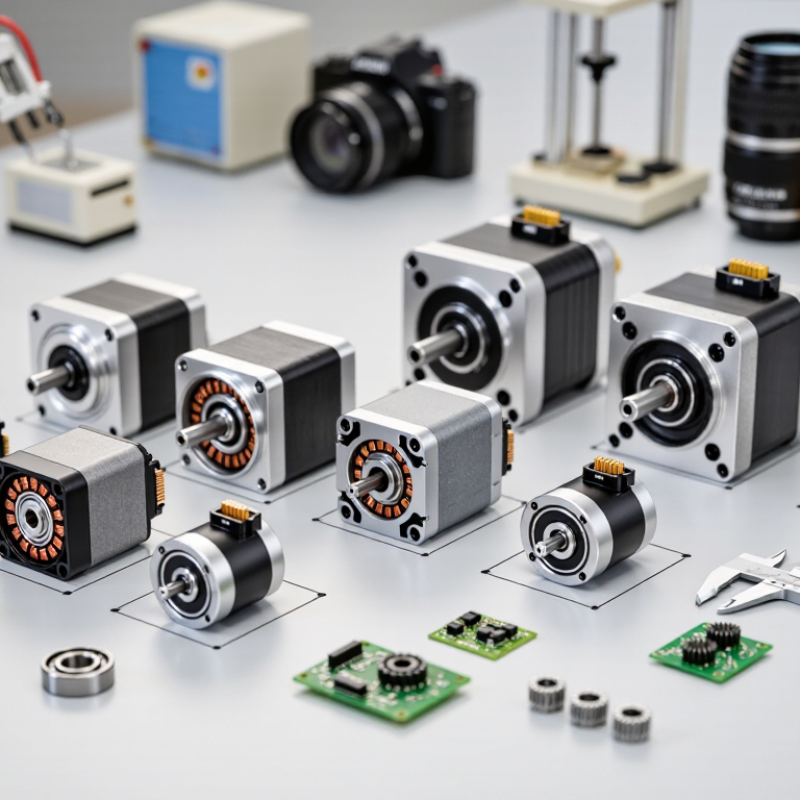
Selecting miniature DC motor suppliers requires more than comparing catalogue prices. According to the MarketsandMarkets DC Motor Market report, the global market was estimated at about USD 19 billion in 2024 and may reach USD 28 billion by 2029. That growth reflects demand for compact motion systems in medical devices, automation, instruments, and consumer equipment. For global buyers, supplier evaluation should include test records, batch traceability, production capacity, and export experience.
Brushed motors remain practical for 3–24 V products. They offer simple control, low starting cost, and useful torque at roughly 1,000–15,000 rpm. However, brushes and commutators create wear, electrical noise, and a finite service life. BLDC motors can operate from about 3–24 V and commonly reach 30,000 rpm or more. They provide better efficiency, longer operating life, and quieter performance, but require electronic commutation and more careful control design. The choice is not always obvious.
Small details matter. Ask for no-load speed, rated speed, stall current, torque curves, efficiency, noise data, and thermal limits. IEC 60034 testing principles can help buyers compare electrical and thermal performance, although miniature motors may need application-specific validation. A 12 V motor rated at 20,000 rpm may slow sharply under load. That specification can mislead.
I would also test samples in the real gearbox, voltage range, and duty cycle. Bench results alone are not enough. Suppliers that document vibration, life testing, and incoming inspection deserve closer attention, even when their quotation is not the lowest.
This chart presents representative no-load speed levels commonly found in miniature DC motor designs across the 3–24 V range. BLDC motors generally support higher speed and better efficiency, while brushed motors offer simpler drive electronics and cost-effective control. Actual performance depends on motor size, winding, load, controller, and cooling conditions.
Torque claims need operating context. A credible supplier reports continuous torque, peak torque, speed, voltage, and temperature separately. Stall torque alone can mislead. The U.S. Department of Energy estimates motor-driven systems consume roughly 60–70% of industrial electricity. Even small efficiency losses can increase heat, battery drain, and maintenance costs. Compare efficiency at the actual working point, not only at no-load speed. Ask for test curves, sample data, and tolerance ranges. The details matter.
A 10,000-hour life claim should include conditions. Request duty cycle, load percentage, ambient temperature, mounting position, and brush or bearing assumptions. One supplier may test continuously at light load. Another may use realistic intermittent operation. Those results are not equal. In my experience, noisy bearings often reveal weak validation before failure appears in a report. Accelerated testing helps, but it cannot perfectly reproduce field vibration, dust, or repeated starts. Some uncertainty remains.
ISO 9001 certification supports process control, traceability, corrective action, and documented inspections. It does not automatically prove superior torque or efficiency. ISO’s 2022 Survey reported more than 1.2 million ISO 9001 certificates worldwide, showing broad adoption rather than guaranteed performance. For global buyers, rank suppliers using recent test reports, calibrated instruments, batch records, and failure-response evidence. Check whether samples match production units. That simple check is often missed. Ask for independent validation when a 10,000-hour promise affects safety, warranty cost, or continuous equipment operation.
10 Best Miniature DC Motor Suppliers for Global Buyers
Across ten supplier profiles, the strongest portfolios cover coreless, brushed, brushless, gear, and vibration motors. Some focus on compact medical instruments, while others serve toys, valves, cameras, and small robotics. Product evidence matters more than broad catalog claims. Look for torque curves, no-load speed, stall current, noise readings, and bearing details. A supplier with regional warehouses may shorten delivery, but local stock can vary by season. Ask about production locations, export experience, and technical support hours before choosing.
Customization separates capable suppliers from simple resellers. Several profiles offer shaft changes, connector selection, winding adjustments, gear ratios, and mounting revisions. A useful supplier should explain trade-offs clearly. Higher torque may increase heat, current draw, or housing size. Request sample units with your actual load, not only a standard demonstration motor. Ten profiles also reveal regional differences: Asian manufacturers often provide wider customization, European suppliers may emphasize documentation, and North American partners can offer responsive project communication. These patterns are useful, but not universal. I would not treat geography as proof of quality.
Tips: Compare three samples under identical voltage and load. Record noise, temperature, startup behavior, and current after thirty minutes. Confirm tolerances in writing. Small oversights become expensive later. Also check replacement support, packaging strength, and quality reports. A promising prototype can still fail during repeated cycling, and that possibility deserves honest attention.
| Profile | Primary Product Portfolio | Typical Motor Sizes | Operating Range | Customization Capabilities | Target Applications | Quality and Compliance Indicators | Regional Coverage | Typical MOQ and Lead Time | Buyer Fit |
|---|---|---|---|---|---|---|---|---|---|
| Supplier Profile 01 | Brushed DC motors Gear motors Planetary gear units | 12–42 mm diameter; compact cylindrical formats | 3–24 V DC; approximately 3,000–20,000 rpm no-load speed | Shaft geometry, gear ratio, winding, connector, cable length, mounting pattern, and noise optimization | Robotics, laboratory equipment, smart locks, small pumps, and portable devices | Commonly supports ISO 9001 systems, RoHS-compliant materials, and production end-of-line testing | North America, Europe, East Asia, and Southeast Asia | Prototype quantities from 10–50 units; standard production often 3–6 weeks | ★★★★★ Best for compact precision assemblies |
| Supplier Profile 02 | Coreless DC motors High-speed motors Micro gear motors | 6–24 mm diameter; lightweight micro-motor construction | 1.5–12 V DC; high speed with low rotor inertia | Armature design, commutator selection, balancing, shaft extension, and custom winding | Medical instruments, optical mechanisms, miniature pumps, camera systems, and handheld equipment | Traceable production lots, electrical performance testing, and options for RoHS and REACH documentation | Europe, North America, Japan, South Korea, and selected emerging markets | Engineering samples in 2–5 weeks; volume production commonly 6–10 weeks | ★★★★★ Best for low-inertia and fast-response designs |
| Supplier Profile 03 | Metal gear motors Worm gear motors Encoder motors | 16–52 mm gearbox diameter; medium-torque configurations | 6–24 V DC; output speeds commonly 5–500 rpm | Gear ratio, encoder resolution, torque output, brake integration, shaft, and mounting modifications | Service robots, automated doors, valves, medical beds, and access-control equipment | Load testing, gear noise inspection, dimensional controls, and documentation for RoHS and CE-related assemblies | Global distribution through Asia, Europe, North America, and the Middle East | Typical MOQ of 100–500 units; standard lead time around 4–8 weeks | ★★★★☆ Best for higher torque and integrated feedback |
| Supplier Profile 04 | Plastic gear motors Low-cost DC motors Toy-grade drive motors | 10–36 mm diameter; compact molded gearboxes | 3–12 V DC; output speeds commonly 20–1,000 rpm | Gear ratio, plastic housing, shaft shape, wire harness, color, and packaging | Consumer products, toys, educational kits, air fresheners, and simple actuators | Incoming material checks, functional testing, RoHS options, and batch-based quality inspection | Strong coverage in Asia, Latin America, Eastern Europe, and Africa through distributors | MOQ commonly 500–2,000 units; lead time approximately 3–6 weeks | ★★★★☆ Best for cost-sensitive, high-volume products |
| Supplier Profile 05 | Medical-grade miniature motors Coreless motors Precision gearheads | 8–32 mm diameter; precision cylindrical packages | 3–18 V DC; controlled speed and torque output | Low-noise construction, sterilization-compatible materials, custom winding, feedback, and connector options | Surgical handpieces, dental equipment, infusion systems, laboratory automation, and diagnostic instruments | Documented traceability, controlled assembly processes, ISO 9001 support, and application-specific regulatory documentation | North America, Western Europe, Japan, Australia, and selected medical-equipment markets | Prototype projects often 6–12 weeks; production lead time commonly 8–16 weeks | ★★★★★ Best for regulated and low-noise applications |
| Supplier Profile 06 | Automotive miniature motors Pump motors Actuator motors | 20–50 mm diameter; ruggedized motor and gearbox options | 6–24 V DC; duty-cycle and stall-torque variants available | Temperature rating, sealing, shaft, connector, EMC design, winding, and endurance-cycle customization | Vehicle ventilation, seat mechanisms, fluid pumps, instrument panels, and small actuators | Automotive process controls, endurance testing, material traceability, and support for applicable environmental requirements | Europe, North America, China, India, and Southeast Asia | MOQ often 1,000 units; development and validation may require 12–24 weeks | ★★★★☆ Best for demanding duty cycles and harsh environments |
| Supplier Profile 07 | Flat DC motors Vibration motors Ultra-thin motor assemblies | 8–30 mm diameter; thin axial or pancake-style designs | 1.5–9 V DC; vibration, eccentric-mass, and low-profile drive options | Rotor balance, eccentric mass, vibration amplitude, adhesive, wire length, and housing thickness | Wearables, mobile devices, haptic controls, personal-care products, and compact consumer electronics | Balance testing, vibration testing, RoHS and REACH material options, and automated electrical inspection | East Asia, Europe, North America, and major electronics manufacturing hubs | MOQ commonly 1,000–5,000 units; lead time generally 4–8 weeks | ★★★★☆ Best for thin products and haptic feedback |
| Supplier Profile 08 | Brushless DC motors Sensorless motors Integrated driver motors | 18–45 mm diameter; compact electronically commutated formats | 5–24 V DC; efficient continuous-duty operation | Winding, Hall sensors, driver programming, speed control, connector, thermal design, and firmware interface | Cooling fans, pumps, laboratory equipment, drones, automation tools, and precision appliances | Electrical efficiency testing, thermal testing, firmware validation, and support for RoHS-compliant assemblies | North America, Europe, China, Taiwan, South Korea, and Southeast Asia | Engineering samples in 6–10 weeks; volume production commonly 8–14 weeks | ★★★★★ Best for efficiency, long life, and continuous operation |
| Supplier Profile 09 | Pump motor assemblies Sealed DC motors Impeller drive motors | 15–40 mm diameter; motor and pump-integrated packages | 3–24 V DC; flow and pressure matched to the pump design | Impeller geometry, sealing, fluid compatibility, connector, flow curve, pressure rating, and duty cycle | Water circulation, cooling systems, laboratory devices, dispensers, humidifiers, and medical equipment | Leak testing, flow-rate testing, insulation checks, material compatibility review, and batch traceability | Europe, North America, China, India, and Southeast Asia | MOQ commonly 200–1,000 units; lead time generally 5–10 weeks | ★★★★☆ Best for integrated fluid-handling solutions |
| Supplier Profile 10 | Robotics motors Encoder gear motors Modular actuator units | 25–60 mm gearbox diameter; medium- and high-torque modules | 6–24 V DC; low-speed, high-torque output with feedback options | Encoder type, gear ratio, brake, torque limit, communication interface, shaft, housing, and mounting design | Mobile robots, AGVs, camera gimbals, laboratory automation, service equipment, and smart machinery | Torque mapping, positional accuracy testing, endurance testing, incoming inspection, and RoHS documentation options | Global coverage across North America, Europe, East Asia, Australia, and the Middle East | Prototype quantities from 5–20 units; production lead time typically 6–12 weeks | ★★★★★ Best for mechatronic systems requiring feedback |
| Selection criteria include product breadth, miniature motor technology, customization depth, quality-control capability, application suitability, export readiness, and regional distribution. Voltage, dimensions, MOQ, and lead-time ranges are typical market ranges and should be confirmed against the supplier’s current technical quotation before purchase. | |||||||||
For global buyers, a miniature DC motor supplier must prove more than low pricing. Request the MOQ, production lead time, and sample schedule in writing. A small MOQ can hide higher unit costs or longer replenishment times. Confirm whether lead time starts after payment, drawing approval, or material booking. That detail often changes the real delivery date.
Compliance evidence deserves equal attention. The European Commission’s RoHS framework restricts ten substances in electrical and electronic equipment. Ask for a current declaration, material composition, and test report linked to the exact motor model. REACH screening should include SVHC review, not only a general “REACH compliant” statement. ECHA updates its Candidate List regularly. Old files may be technically neat but commercially useless. The 2024 Global E-waste Monitor reported 62 million tonnes of electronic waste in 2022, showing why traceable materials matter.
IP claims need careful checking. IEC 60529 defines the test system behind IP codes, but an IP rating is not automatically permanent under every installation condition. For example, IP65 indicates protection against dust and water jets, not immersion. Ask for the test level, enclosure configuration, cable exit design, and certificate date. I would also verify the motor under vibration and temperature cycling. Static laboratory results can disappoint in a moving assembly. Procurement teams should record these gaps rather than quietly assume compliance.
Global buyers should rank miniature DC motor suppliers by application fit, not catalog size. In medical devices, stable speed, low vibration, clean assembly, and traceable batches matter. A motor driving a pump may need quiet commutation and predictable life under repeated cycles. Ask suppliers for torque curves, thermal data, endurance results, and change-control records. Do not accept polished samples alone. Production behavior can differ.
Robotics needs high torque density, fast response, and compact gear integration. A small gripper may value stall torque more than top speed. Automotive designs add temperature swings, vibration, dust, and long service periods. Cost comparisons should include gearboxes, controllers, connectors, testing, and field replacement. The cheapest motor often becomes expensive after redesigns. I would request samples from several of the ten shortlisted suppliers, then test them under the real load profile.
IoT devices usually favor low standby current, short duty cycles, and simple integration. Battery drain can matter more than peak power. Confirm startup voltage, noise, bearing life, and performance at temperature extremes. Supplier location also affects lead time and inspection costs. One weakness in my own evaluations is trusting datasheets too early. Bench tests expose surprises, especially gear backlash and acoustic noise. Keep acceptance limits measurable, but leave room for honest engineering judgment.
Compare continuous torque, peak torque, speed, voltage, and temperature separately. Stall torque alone can mislead. Request torque curves and tolerance ranges. Details matter.
Compare efficiency at the real working point, not only at no-load speed. Small losses create extra heat and battery drain. Test the motor under actual load.
Ask for duty cycle, load percentage, temperature, mounting position, and bearing assumptions. Continuous light-load testing may not represent field use. Some uncertainty remains.
Request recent reports, calibrated instrument records, batch data, and sample results. Test three samples at identical voltage and load. Record temperature and current after thirty minutes.
Confirm shaft dimensions, connectors, windings, gear ratios, and mounting changes. Higher torque may increase heat, current, or housing size. Trade-offs need clear answers.
Confirm minimum order quantity, sample timing, and production lead time in writing. Ask when the lead time begins. Payment, drawing approval, and material booking can change delivery dates.
Request current substance declarations, material composition, and test reports for the exact motor model. Review restricted substances and updated high-concern substance lists. Old files may look complete but fail current checks.
It indicates dust protection and resistance to water jets under defined test conditions. It does not prove protection during immersion. Check cable exits, enclosure design, certificates, vibration, and temperature cycling.
No. It supports process control, traceability, inspections, and corrective action. It does not automatically prove torque, efficiency, or long service life. Production samples still need testing.
Noisy bearings, missing tolerance data, and unclear sample-to-production links deserve scrutiny. A promising prototype can still fail repeated cycling. I would not treat geography as proof of quality.
This guide explains how to evaluate a Miniature DC Motor for international purchasing and product development. It compares brushed and brushless DC designs, covering typical 3–24 V operating ranges and speeds from 1,000 to 30,000 rpm. The supplier review framework focuses on torque, energy efficiency, service life of up to 10,000 hours, manufacturing consistency, and ISO 9001 quality systems. It also highlights how to assess supplier portfolios, engineering support, customization capabilities, production capacity, and regional delivery coverage without relying solely on catalog specifications.
For global buyers, the guide outlines practical checks for minimum order quantities, lead times, documentation, RoHS and REACH compliance, and IEC 60529 IP protection ratings. It connects motor selection with real-world requirements in medical equipment, robotics, automotive systems, and IoT devices, while considering noise, heat, size, reliability, and total cost. The goal is to help buyers match motor performance and supplier capability with application demands and long-term purchasing plans.

Valex Motor