Why Choose a Variable Speed Motor for Global Procurement?
Global procurement teams are under pressure to reduce energy use, control operating costs, and maintain dependable production. A Variable Speed Motor can support these goals by adjusting its output to real operating demand. Instead of running at one fixed speed, it can slow down during light workloads and increase power when production rises. This flexibility is valuable in pumps, fans, conveyors, compressors, and automated processing equipment.
The benefits become clearer in real facilities. A pump may need full capacity during peak hours but only half capacity overnight. A variable speed system can reduce unnecessary energy consumption during those quieter periods. It can also provide smoother starts, lower mechanical stress, and more precise process control. Procurement professionals should review motor efficiency, controller compatibility, voltage standards, certifications, spare parts, and supplier service coverage. These details often matter more than the initial purchase price.
However, a Variable Speed Motor is not automatically the right choice for every application. Some systems have simple, steady workloads and may gain little from speed adjustment. Installation quality also affects performance. Incorrect programming, poor ventilation, or unsuitable wiring can create avoidable problems. This is where supplier experience and technical documentation become essential. Buyers should request tested performance data, warranty terms, maintenance guidance, and references from comparable installations. Global sourcing can reduce costs, but it may also introduce communication delays and inconsistent support. A careful evaluation keeps the decision practical, reliable, and adaptable to changing production needs.
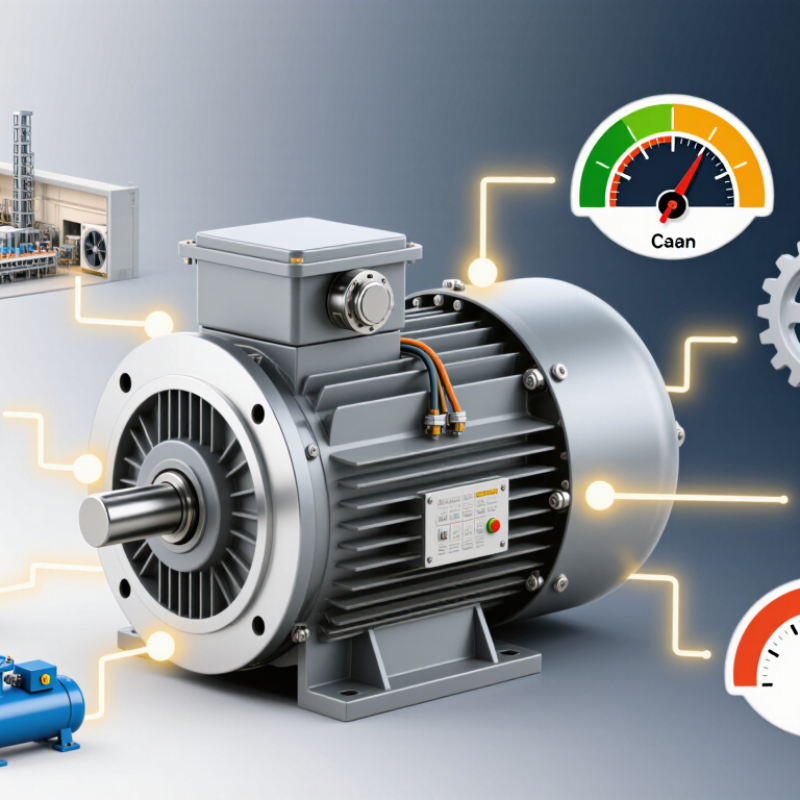
A variable speed motor is an electric motor designed to operate at different rotational speeds. Its speed changes through a controller, commonly called a variable frequency drive. The drive adjusts electrical frequency and voltage to match the required workload. A fixed-speed motor runs at one main speed. A variable speed motor adapts.
Picture a conveyor moving fragile packages at 20 meters per minute, then slowing near a loading station. The motor can reduce speed without relying only on mechanical brakes. Pumps can also lower flow by slowing the impeller, often reducing wasted energy. That sounds simple. It is not always.
In global procurement, the motor and its drive should be evaluated as one working system. Check rated voltage, frequency, torque range, enclosure protection, insulation class, mounting dimensions, and communication requirements. A unit suitable for a 400-volt, 50-hertz supply may need different configuration elsewhere. Local service skills matter too. A technically efficient motor can become a poor purchase if replacement bearings or trained technicians are unavailable.
Procurement teams should request performance curves, efficiency data, overload capacity, noise levels, and tested operating limits. Pay attention to low-speed cooling. A motor with a shaft-mounted fan may cool less effectively when running slowly. This detail is easy to miss. It can shorten service life.
Variable speed control may lower energy use, improve process accuracy, and reduce mechanical shock during starts. However, savings depend on the load profile, drive settings, installation quality, and maintenance habits. Choosing only by purchase price is tempting, but incomplete.
A variable speed motor adjusts its rotation to match the machine’s actual demand. In many industrial systems, a drive changes the incoming electrical frequency and voltage. Lower frequency produces slower rotation. Higher frequency increases speed within the motor’s safe operating range. This process reduces unnecessary energy use during partial-load operation.
Control can be open-loop or closed-loop. Open-loop control follows programmed settings without measuring the final result. It is simple and cost-effective. Closed-loop control uses sensors to monitor speed, torque, pressure, or flow. A controller compares real measurements with target values. It then corrects the motor output within milliseconds. The result is steadier conveyor movement, smoother pump pressure, and less mechanical shock during startup.
Small details affect procurement decisions. Motor compatibility, voltage standards, enclosure protection, and local service skills require careful checking. A factory technician may tune acceleration too aggressively, causing belt tension and nuisance trips. I have seen this happen during commissioning. The problem was not the motor itself. The settings were incomplete. Temperature, load changes, and cable length can also influence performance. Sometimes, energy savings are overstated because the equipment operates near full load most of the day. Reliable selection depends on measured duty cycles, verified technical data, and practical testing before large-scale purchasing.
Variable speed motors give procurement teams more than adjustable rotation. They match output to actual demand, which can reduce wasted energy in fans, pumps, conveyors, and compressors. A pump running at half speed may require far less power than one running at full speed with a throttled valve. The saving depends on load profile, control settings, and operating hours. Measure those details before making a purchase.
In daily operation, controlled acceleration reduces sudden torque and mechanical shock. Belts, couplings, shafts, and bearings may experience less stress. Operators can tune speed for filling, mixing, cutting, or material handling tasks. This improves process consistency and may reduce product damage.
During commissioning, technicians should check ramp times, overload limits, ambient temperature, and power supply compatibility. Small settings matter.
For global procurement, flexibility is another practical benefit. A suitable motor system can support different production schedules and changing line requirements. Buyers should confirm voltage, frequency, enclosure protection, documentation, spare parts, and local service capability.
Variable speed motors are not automatically the cheapest option. Drives add cost and require skilled setup. Poor tuning can create heat, noise, or unexpected downtime. That is the part procurement plans sometimes underestimate.
Variable speed motors serve many industries because their output can match changing process demand. The IEA estimates that electric motor systems consume about half of global electricity. Efficiency matters at procurement stage.
HVAC systems use them to adjust airflow as room occupancy changes. Pumps in water and wastewater plants slow down during low-demand periods. The U.S. Department of Energy reports that motor-driven equipment uses about 68% of industrial electricity in the United States. This explains their value in factories, where conveyors, compressors, fans, and machine tools rarely operate under identical loads.
Mining operations use variable speed motors for crushers, conveyors, and ventilation systems. Food and beverage plants apply them to mixers, fillers, and packaging lines. Agriculture uses them in irrigation pumps and grain handling equipment. I have seen procurement teams focus too heavily on rated power. That approach can miss starting torque, dust exposure, ambient temperature, and local grid conditions. A motor that fits the catalog may still perform poorly in a hot pump room.
Global buyers should compare efficiency classes, control compatibility, enclosure protection, spare-part access, and service skills. IEC 60034-30-1 provides a common efficiency classification framework for many motor types. However, published efficiency figures do not replace field testing. Cable length, harmonics, poor tuning, and oversized motors can reduce real savings. Procurement decisions need operating profiles, not only nameplate data.
Which industries use variable speed motors? Variable speed motors are widely applied where output demand changes, especially in pumping, ventilation, conveying, compression, and process-control systems.
The chart uses the affinity laws for centrifugal pumps and fans: flow is proportional to speed, pressure is proportional to speed squared, and power is approximately proportional to speed cubed. Actual savings depend on the system curve, operating profile, motor efficiency, and control strategy.
Global buyers should evaluate variable speed motors as complete operating systems, not isolated catalog items.
Start with the application: load profile, starting torque, speed range, ambient temperature, and daily operating hours. A conveyor in a dusty warehouse needs different protection from a clean packaging line. Measure it. Confirm rated voltage, frequency, insulation class, enclosure rating, shaft dimensions, and mounting position. Request efficiency curves at several speeds, not only the maximum rating. That detail exposes unrealistic energy claims.
Supplier assessment should combine documents with physical evidence.
Ask for test reports, calibration records, production capacity, quality controls, and traceable serial records. Check whether the factory can repeat the quoted performance across several sample units. One sample is not proof. A video call cannot replace an independent inspection before mass production. For global sourcing, verify applicable electrical standards in the destination market and clarify responsibility for conformity documents. Also compare lead time, packaging, spare parts, technical support, payment terms, and warranty exclusions. Cheap freight can become expensive downtime.
A strong request for quotation should include drawings, acceptance tests, delivery milestones, and failure-response times.
Use a pilot order when the duty cycle is uncertain. Record vibration, temperature rise, noise, and energy consumption during a real operating shift. Then compare the results with the supplier’s declared data. The process is rarely perfect. We may overlook harmonics, local service skills, or seasonal heat. Document those assumptions and revisit them after installation. Keep the test data beside the purchase contract.
It is an electric motor that operates at different rotational speeds. A controller adjusts its frequency and voltage. It adapts to workload changes.
The motor slows when demand falls, reducing unnecessary power consumption. For example, a pump can lower flow by slowing its impeller. Savings are not automatic.
Common applications include HVAC, water treatment, manufacturing, mining, agriculture, and food processing. They operate conveyors, pumps, fans, mixers, compressors, and packaging equipment.
Check voltage, frequency, torque range, speed range, enclosure protection, insulation class, and mounting dimensions. Also confirm cooling, communication needs, and shaft size. Do not rely on rated power alone.
They function as one operating system. Their compatibility affects efficiency, torque, cooling, noise, and reliability. A suitable motor may perform poorly with incorrect settings.
A shaft-mounted fan may move less air at low speed. Temperature can rise inside the motor. This detail is easy to miss.
Request performance curves, efficiency data, overload capacity, noise levels, test reports, and operating limits. Ask for results at several speeds, not only maximum speed.
Compare documents with physical inspection and sample testing. Measure vibration, temperature rise, noise, and energy use during a real operating shift. One sample is not proof.
Consider spare-part access, local service skills, delivery time, packaging, warranty exclusions, and conformity documents. A low purchase price can hide expensive downtime.
Teams may overlook harmonics, seasonal heat, cable length, or oversized motors. We may also trust catalog figures too quickly. Document assumptions and review them after installation.
A Variable Speed Motor is designed to adjust its operating speed according to changing workload requirements, rather than running at one fixed rate. Its speed is typically managed through an electronic control system that changes the motor’s operating frequency and voltage, allowing equipment to start smoothly, respond precisely, and maintain efficient performance. This flexibility can reduce energy consumption, mechanical stress, noise, and operating costs while improving process control and productivity.
Variable speed motors are widely used in pumps, fans, conveyors, compressors, machine tools, HVAC systems, and other industrial equipment. For global buyers, evaluation should include power rating, speed range, torque performance, control compatibility, efficiency, environmental protection, maintenance needs, safety certifications, and total ownership cost. Reliable sourcing also requires clear technical specifications, consistent quality control, documentation, delivery capability, and after-sales support. By matching motor characteristics with the application and verifying supplier performance carefully, procurement teams can achieve dependable operation and long-term value.

Valex Motor